
Commercial DTF printing has become faster. Printers can produce hundreds of transfers per hour, giving apparel decorators the ability to take on larger orders and increase daily production.
But printing the transfers is only one part of the process.
Once DTF film has been printed, powdered, and cured, those transfers still need to be separated and prepared for production. For many shops, that means an employee standing at a table with scissors or a manual cutter, cutting gang sheets and separating individual transfers.
As print volume increases, that process can become a significant production bottleneck.
DTF Transfer Cutting Equipment gives high-production shops another way to approach this part of the workflow. Instead of increasing manual labor as printing capacity grows, businesses can use dedicated cutting equipment to move printed DTF film from the printer and dryer toward production-ready transfer sheets.
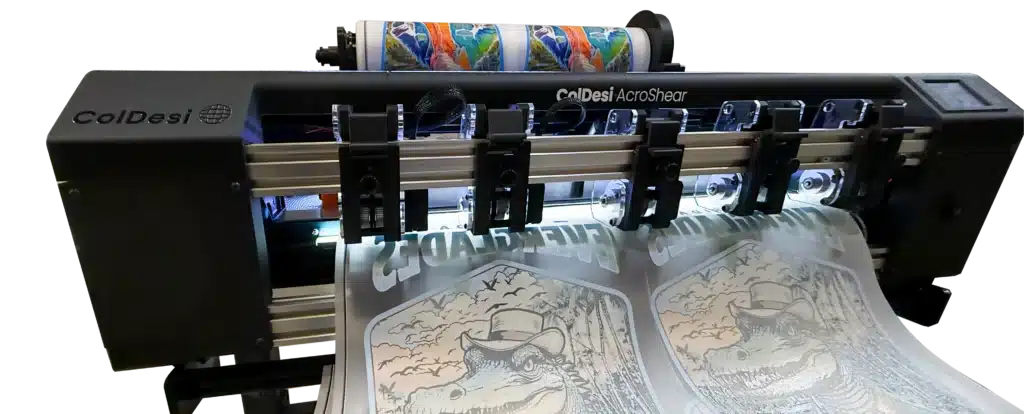
The ColDesi AcroShear DTF Transfer Cutting System is designed specifically for this stage of DTF production.
The DTF Production Bottleneck That Happens After Printing
Investing in a faster DTF printer can dramatically increase how much film a business produces. But increasing print speed does not necessarily increase the speed of the entire production process.
Every printed roll still needs to move through the next steps.
If employees are manually measuring, cutting, and separating transfers, the finishing process may struggle to keep pace with the printer.
That can create several challenges:
- Printed rolls waiting to be cut
- Employees spending hours manually separating transfers
- Additional handling between printing and pressing
- Difficulty keeping up during high-volume production periods
- More labor required as transfer volume increases
For shops producing DTF transfers at commercial volumes, improving this stage of production can be just as important as increasing printer speed.
That is where DTF Transfer Cutting Equipment becomes part of the production conversation.
What Is DTF Transfer Cutting Equipment?
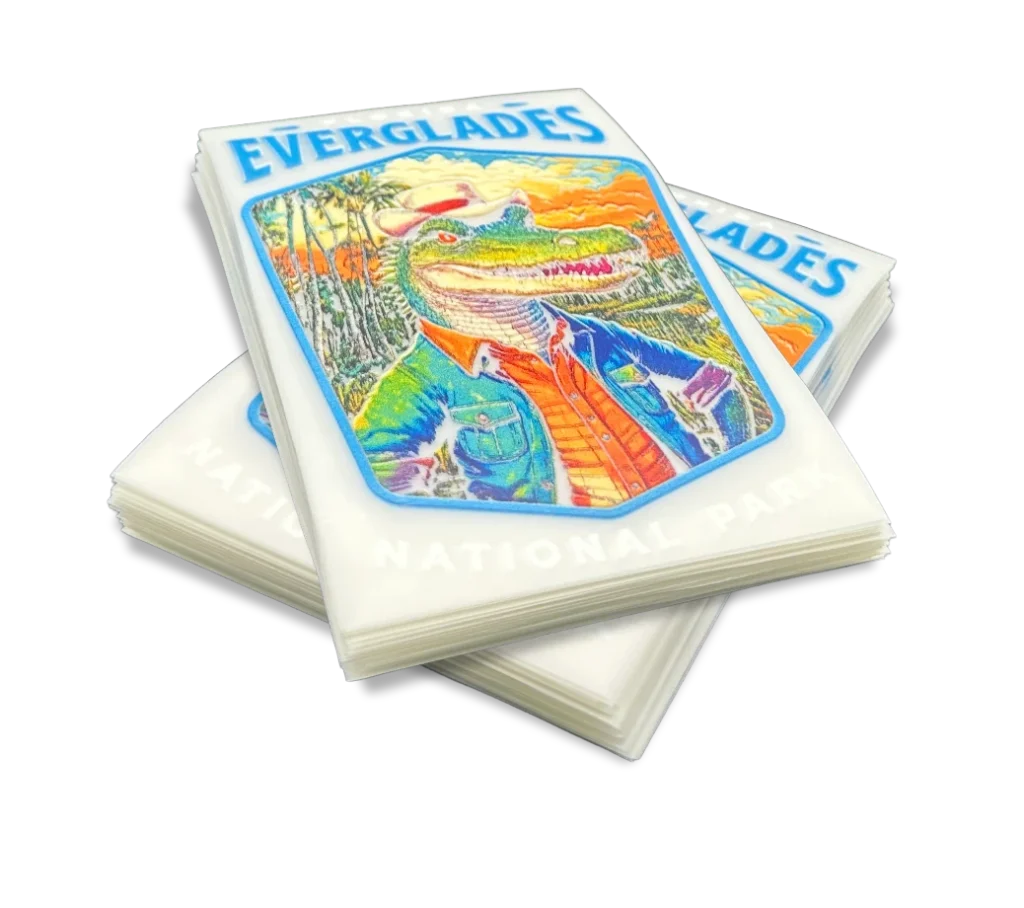
DTF Transfer Cutting Equipment is designed to help take continuous printed DTF film and separate it into usable transfer sheets.
Instead of relying exclusively on an operator to manually cut transfers, a dedicated cutting system can perform crosscuts, slit multiple transfer lanes, and use information printed on the film to determine where cuts need to occur.
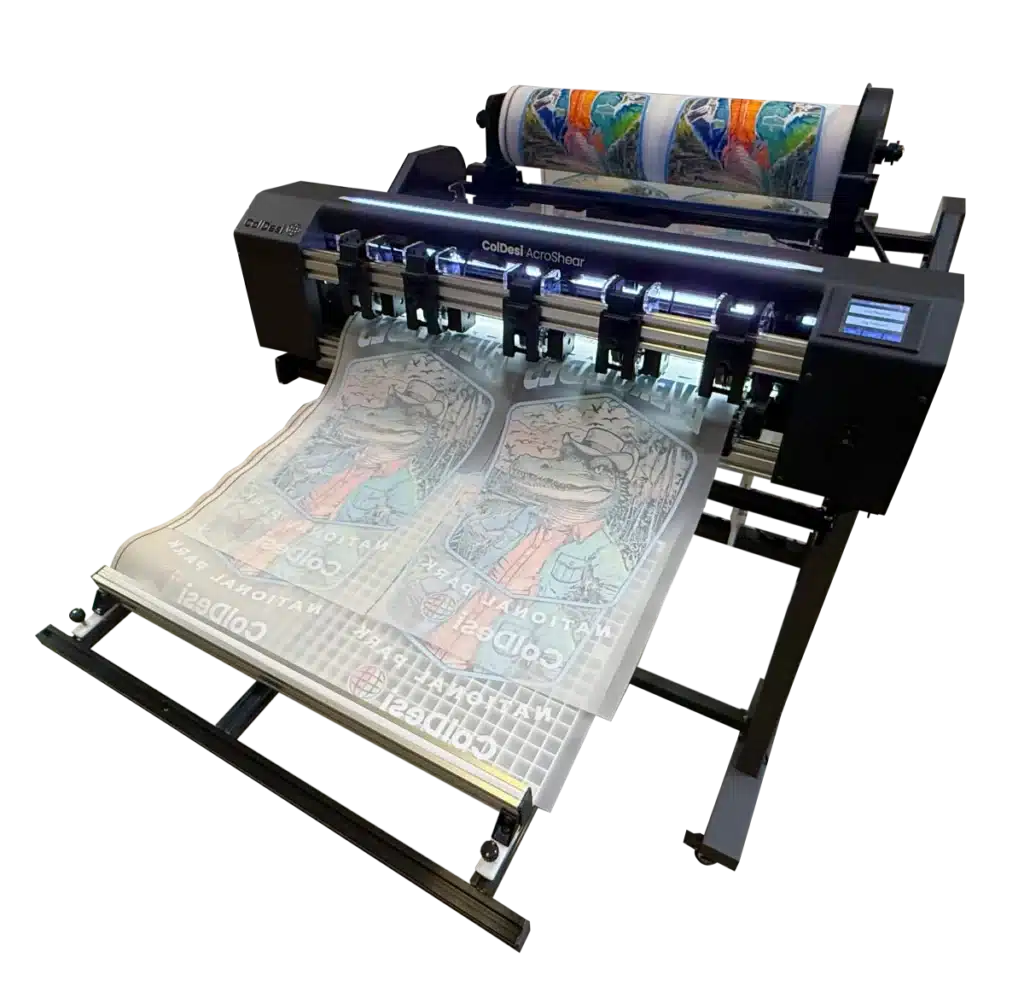
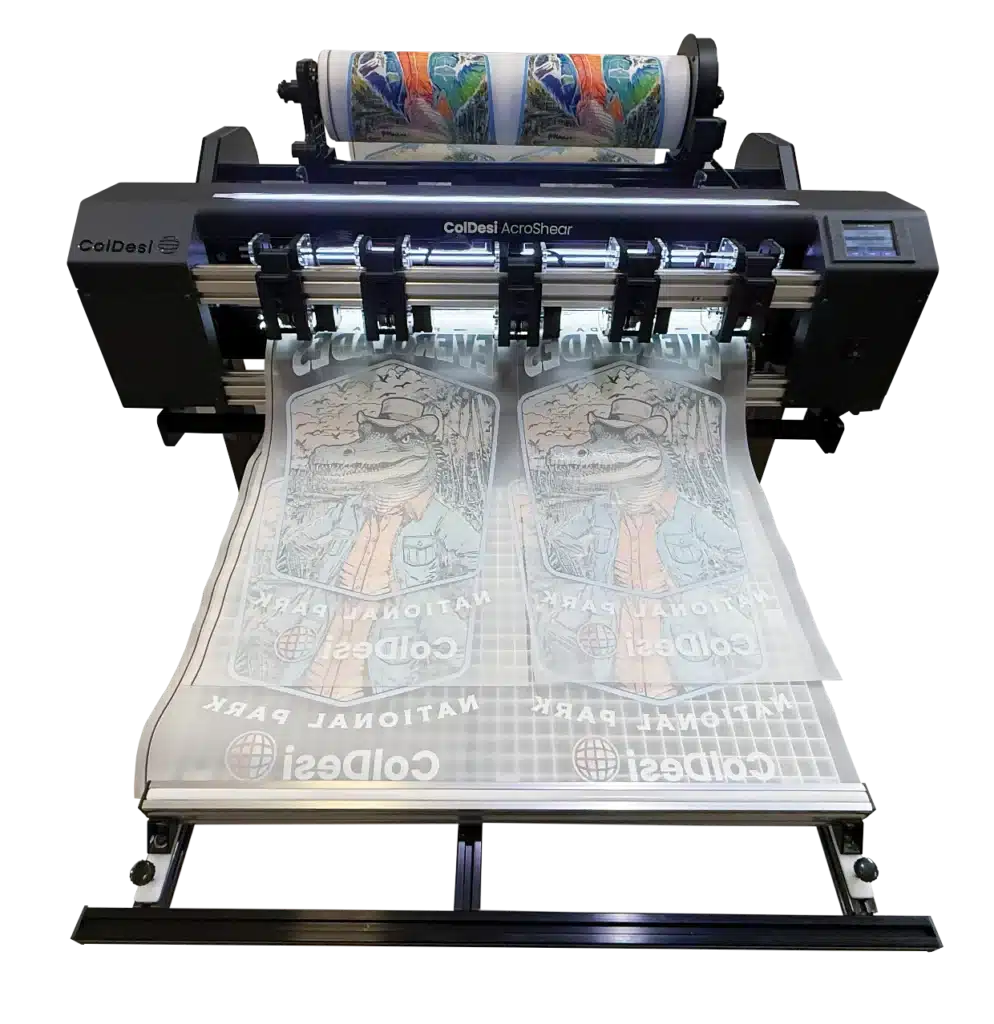
AcroShear combines cross cutting and slitting within one system designed for DTF film up to 24 inches wide. It features 10 independently driven industrial rotary shear positions along with printed-mark detection, QR-based job control, and film-loop management.
This creates a more efficient path between printing the transfers and getting them ready for the next stage of production.
Cross Cutting and Slitting in One DTF Workflow
Gang sheets often contain multiple transfers positioned across the width and length of the film.
Separating them can require two different types of cuts.
Cross cutting cuts across the width of the film to separate sections as they move through production.
Slitting cuts along the direction of film travel, allowing multiple lanes of transfers to be separated at the same time.
AcroShear brings both processes together.
The system uses 10 individually controlled industrial rotary shear cutting drives rather than conventional razor or crush-cut slitting. Individual control allows the equipment to engage only the cutting positions required for a particular production job.
This provides flexibility for different gang-sheet configurations, transfer sizes, and finished widths without requiring every cutting position to be used on every job.
DTF Transfer Cutting Equipment Built for High-Volume Production
Cutting equipment only improves a DTF workflow if it can keep pace with production.
AcroShear is designed for high-volume DTF cutting and can process transfers at different rates depending on transfer size and job configuration.
Production can reach:
- 4″ × 4″ transfers: up to 55 per minute / 3,300 per hour
- 8″ × 8″ transfers: up to 30 per minute / 1,800 per hour
- 12″ × 12″ transfers: up to 18 per minute / 1,080 per hour
Actual production varies based on artwork, cut configuration, film, workflow, and other production conditions.
For high-production shops, this means cutting can become part of the production workflow instead of remaining a separate manual task that has to catch up with the printer.
Run Inline with Your DTF Workflow or Process Printed Rolls
Not every DTF shop operates the same way.
Some businesses want film to move directly from printing and curing into cutting. Others prefer to print rolls first and finish them at another point in the production schedule.
AcroShear supports both approaches.
- Inline Production: AcroShear can be positioned downstream from a compatible DTF dryer. Printed and cured film can then move directly into the cutting workflow.
This creates a more continuous process from printing to curing to cutting and slitting.
- Printed Roll Production: Shops can also process previously printed DTF film using the AcroShear unwind system.
For example, a business could produce rolls during one shift or production period and cut those rolls later.
This gives businesses the flexibility to determine how DTF transfer cutting fits into their existing production schedule instead of dedicating the system exclusively to a single printer.
- Let the Printed Film Communicate with the Cutter: Different DTF jobs may require different transfer sizes, cutting locations, and slitter configurations.
AcroShear can use QR information incorporated into the printed film to communicate upcoming job requirements.
QR data can provide information about:
- Job changes
- Slitter positions
- Cutting requirements
- Upcoming workflow changes
Printed registration or tick marks can also provide positioning information for crosscuts.
The system distinguishes between standard cutting marks and job-change marks, allowing information printed directly on the film to help control different stages of the cutting workflow.
For operators, that means less time manually measuring and determining where every crosscut needs to be made.
DTF Cutting Without Being Locked into One Printer
Adding DTF Transfer Cutting Equipment should not necessarily mean replacing the rest of your production setup.
AcroShear does not need to be permanently tied to one printer manufacturer or RIP environment.
A dedicated AcroShear production application can generate information needed by the cutting workflow, including cross-cut marks, slitter positions, job-change information, and QR workflow data.
That information can be incorporated into production artwork independently of the printer RIP.
This gives shops more flexibility when adding AcroShear to an existing DTF production environment.
Move the Film Without Squeezing the Printed Artwork
Transporting DTF film through finishing equipment presents another challenge: the printed surface needs to be protected.
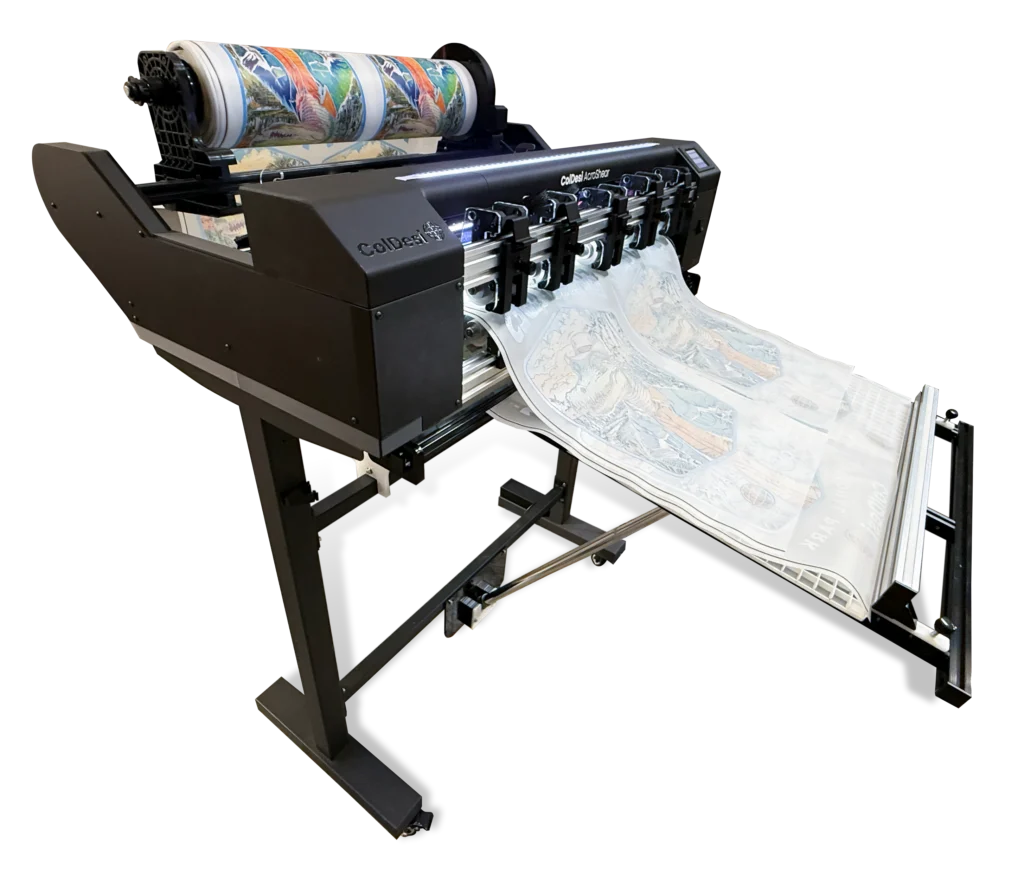
AcroShear uses an edge-driven film transport system.
Instead of requiring transport rollers to squeeze or nip the printed portion of the film, the system moves the film from its edges.
This design helps keep printed artwork away from drive rollers, reduce opportunities for oil, powder or residue transfer, keep transport components cleaner, and reduce the risk of marking finished artwork.
For a DTF shop, moving film efficiently is important. Moving it without compromising the finished transfer is even more important.
Managing the Film Between the Dryer and Cutter
Connecting multiple pieces of production equipment can create problems if one system tries to physically pull film from another.
AcroShear approaches this differently.
The equipment can operate from a relaxed film loop rather than requiring continuous web tension between the dryer and cutter. This allows the printer, dryer, and cutting system to operate together without functioning as one mechanically tensioned web line.
LiDAR monitoring tracks the amount of film available within that loop.
When more film is needed, the system can wait for additional film rather than pulling against upstream equipment.
That helps accommodate changes in production speed while creating a more flexible connection between printing, curing, and cutting.
Reducing Manual Work as DTF Production Grows
The value of DTF Transfer Cutting Equipment is not simply that it cuts film.
The bigger opportunity is changing how labor is used within a high-production DTF operation.
As transfer volume increases, cutting every gang sheet can require additional employee time. Increasing printer output without addressing finishing may simply move the production bottleneck from one part of the shop to another.
A dedicated cutting system can help reduce repetitive manual cutting while allowing employees to focus on other production responsibilities.
For businesses evaluating DTF equipment, that makes it important to think beyond the printer itself.
Ask:
How quickly can we print transfers?
But also ask:
What happens to those transfers after they come out of the dryer?
The answer can have a significant impact on the efficiency of the overall DTF workflow.
When Does DTF Transfer Cutting Equipment Make Sense?
Not every DTF operation needs dedicated transfer cutting equipment.
A shop producing a relatively small number of transfers may be able to handle cutting manually without creating a major production constraint.
The conversation changes as volume grows.
DTF Transfer Cutting Equipment may be worth evaluating when:
- Employees spend significant production time manually cutting transfers
- Printed rolls regularly wait to be separated
- Cutting cannot keep pace with printer output
- The business is increasing DTF production capacity
- Multiple gang-sheet layouts are processed throughout the day
- The shop wants a more continuous printing, curing, and cutting workflow
- Labor is better utilized in other areas of production
The important measurement is not simply how many transfers the printer can produce. It is how efficiently the entire shop can move those transfers through production.
Build a More Complete DTF Production Workflow
Faster DTF printing has changed what commercial shops can produce. It has also made the processes surrounding the printer increasingly important.
Printing, powdering, curing, cutting, and pressing all contribute to total production capacity.
If one stage cannot keep up, it can limit the benefits of faster equipment elsewhere in the workflow.
The ColDesi AcroShear DTF Transfer Cutting System is designed to address the cutting stage by combining cross cutting, 10 independently driven rotary shear positions, printed-mark detection, QR-based job control, film-loop management, and inline or roll-fed operation.
For high-production DTF businesses, DTF Transfer Cutting Equipment can help create a more efficient path from a printed roll to transfers that are ready for the next stage of production.
Print. Cut. Slit. Keep Production Moving.
See How AcroShear Fits Your DTF Workflow
Fill out the form below to speak with a ColDesi equipment specialist about your current DTF printer, dryer, transfer volume, and production workflow to determine how AcroShear can fit into your operation.

