
As a thought experiment, imagine a customer walks into your shop with a piece of wood, an acrylic panel, or a blank promotional item and asks…
“Can you print on this?”
What do you say?
Well, if your shop relies on technologies like white toner, DTF, or HTV, you might have to find another way to produce the job… or… turn the customer away altogether.
But what if you could simply place that piece of wood, acrylic, or other rigid material directly onto your printer…
…and print on it?
Well, you CAN!
Because a UV flatbed printer machine lets you do just THAT.
And if you’re thinking about adding one to your shop, you probably have a few questions:
- What is a UV flatbed printer machine?
- How does it actually work?
- What can you print on?
- What types of products can you create?
- What materials can it handle?
- And… is one worth adding to your business?
Those are all good questions.
And we’re going to answer them.
But before we get into the nuts and bolts, let’s start with the most basic question of all…
What exactly IS a UV flatbed printer machine?
What Is a UV Flatbed Printer Machine?
Put simply…
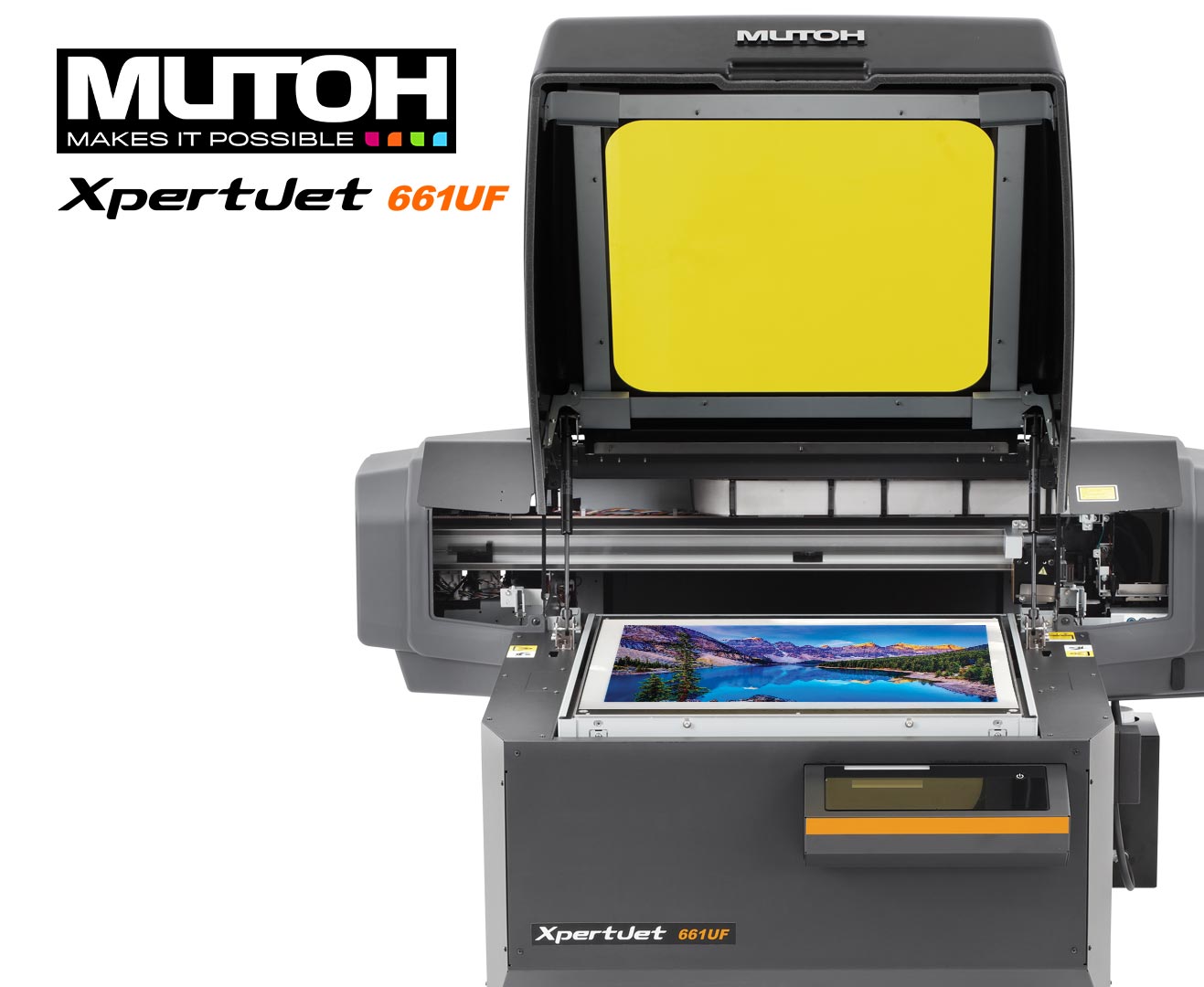
A UV flatbed printer is a digital machine that lets you print directly onto almost any solid, rigid, or semi-flexible object.
And by “rigid objects,” we mean things like: wood, glass, metal, acrylic, certain plastics, ceramic, PVC, 3D printed parts, cardboard, and hundreds of other substrates.
How does it actually manage to print directly onto all of those materials?
We’ll put a pin in that for a moment…
Because before we get into the HOW, let’s look at what makes a UV flatbed printer, well… a UV flatbed printer in the first place.
And the answer is hiding right there in the name.
UV.
It stands for ultraviolet light, which we’re all probably at least somewhat familiar with.
But if you need a quick refresher…
Ultraviolet (UV) light is a type of invisible light with a wavelength shorter than visible light but longer than X-rays.
UV light itself is invisible to the human eye, but it often appears as a faint violet glow when emitted by UV lamps.
More importantly, UV light has higher energy compared to regular light, and this “high energy” is the key concept here.
We’ll come back to exactly why in just a moment…
For now, let’s move on to the other half of the name.
And sitting right next to “UV” in the name is another word we shouldn’t gloss over (that matters just as much)…
Flatbed.
And this one’s pretty straightforward.
A flatbed printer has a flat, stationary printing surface — or “bed” — where you place the material you want to print on.
Instead of feeding the substrate through the printer like a sheet of paper, you place it right on the bed.
That said, not every object can simply be placed flat on the bed.
Depending on the material, curvature, or form factor of the item you’re printing on, you may need jigs, fixtures, or molds to hold it securely in position.
But once the material is properly positioned, the printing process itself is remarkably direct.
Unlike traditional transfer-based methods, commercial UV printers can print directly onto the finished product itself.
This eliminates the need for many secondary application processes, such as weeding, heat pressing, applying transfer materials, pretreatment, and other application-specific steps.
The result is a simpler (and often cleaner) workflow.
And that’s really the basic idea behind the name:
UV + flatbed.
Now you know where the name comes from.
But there’s still that question we put a pin in earlier…
How does the printer actually manage to print onto all those different materials?
Well, that’s what we’ll get into in the next part.
How Does a UV Flatbed Printer Work?
So, we’ve established that a UV flatbed printer can print directly onto all kinds of different materials and objects.
But HOW?
How can the same printer take a piece of wood, a sheet of acrylic, a ceramic tile, or a metal panel…
…and somehow put an image directly onto the surface of each one?
Well, the answer comes down to two things working together: ink and UV light.
And once you understand what those two things are doing, the whole process starts to make a lot more sense.
So, let’s take a look at what’s actually happening inside the printer…
First, the printer lays down tiny droplets of specially formulated UV ink onto the surface of the material.
The ink doesn’t simply sit there and slowly dry like traditional ink might.
Instead, almost immediately after the ink is deposited, UV light hits it.
Remember that “high energy” UV light we talked about earlier?
This is where it matters.
The UV light triggers a chemical reaction in the ink that causes it to cure — essentially turning the liquid ink into a solid film.
So instead of waiting for the ink to air-dry, the printer can print and cure at the same time.
Because the ink is cured almost immediately, it stays where the printer puts it.
The printer can then build the image up using thousands — and sometimes millions — of tiny ink droplets.
The printhead moves back and forth across the material, depositing incredibly small amounts of ink in precisely controlled locations.
By controlling the position, size, and combination of those ink droplets, the printer can recreate everything from simple text and logos…
…to detailed photographs, gradients, textures, and other complex graphics.
Pretty impressive, right?
But let’s backpedal for a second.
We’ve just looked at what’s happening during the actual printing process.
But what does the whole process look like from start to finish?
Well, it’s actually pretty straightforward.
There are six basic steps:
1. Prepare the artwork
First, you prepare the image, logo, text, or other design you want to print.
2. Place the substrate on the printer bed.
Next, you place the material (or object) you want to print on directly onto the printbed.
3. Position the artwork.
The printer’s software is then used to position the artwork where you want it to appear on the substrate.
4. The printheads apply UV-curable ink.
The printheads move across the material, depositing tiny droplets of UV-curable ink onto the surface.
5. UV light cures the ink as it is printed.
As the ink is deposited, UV light cures it, causing the ink to solidify on the surface.
6. The finished product is ready for handling.
Once the print is complete, the finished piece can be removed from the printer and used, stored, packaged, or sold.
And that’s essentially how a UV flatbed printer can take a digital image…
…and turn it into a finished print on everything from wood and acrylic to ceramic, metal, glass, and other materials.
So now that we know how it works, there’s another question worth answering:
What can you actually print with a UV flatbed printer?
Quite a lot, as it turns out.
What Can You Print With a UV Flatbed Printer Machine?
Now, if you’ve made it this far in the article (and are still reading), you now understand what UV printing is, what a UV printer is… and HOW it works.
But what can you actually DO with it?
What kinds of things can you print?
Well, the short answer is…
Almost anything.
Well, almost anything with a flat or rigid surface, anyway.
Now, obviously, that doesn’t mean you can walk into your workshop, grab the first random object you see, throw it onto the printer bed and expect it to work.
There are a couple of things that need to be taken into consideration.
For starters, the material needs to be something you can SAFELY position on the printer bed.
And its surface needs to be COMPATIBLE with the UV ink and curing process.
If those boxes are all ticked, there’s a good chance you can print on it.
And there’s a LOT of stuff that falls into that category.
We’re talking about everything from signs and promotional products…
…to acrylic, wood, metal, glass, PVC, foam board and ceramic…
…as well as things like awards, plaques, retail displays, packaging prototypes, personalized products and specialty décor.
And that’s just scratching the surface.
So, let’s take a look at some of the most common things people use UV flatbed printers to print and create.
You might be surprised by what’s on the list:
- Signs
- Promotional Products
- Acrylic
- Wood
- Metal
- Glass
- PVC
- Plastic
- Foam Board
- Ceramic Products
- Leather and faux leather
- Speciality décor
- Awards and plaques
- Personalized products
- Retail displays
- Packaging prototypes
- And plenty of other materials
And that list should give you a pretty good idea of just how VERSATILE a UV flatbed printer can be.
So, while you’ve got a LOT of options, it’s always worth checking that your particular printer and the material you’re using are compatible before you print.
Because here’s the thing…
Not every UV flatbed printer can print on every material.
The type of UV ink being used, the printer’s specifications, the surface you’re printing on, and whether that surface needs to be prepared or treated can all make a difference.
So, think of the list above as a good starting point, rather than a guarantee that every UV printer can print on every material.
Phew! Now that we’ve got all that out of the way, let’s move on to the benefits of UV flatbed printing.
What Are the Benefits of UV Flatbed Printing?
By now, we’ve covered the what, the why, and the how of UV printing.
That’s a lot to get through in one go, so let’s take a little breather here…
And change gears for a moment.
We’ve spent the last few sections looking at what UV flatbed printers are, how they work, and what you can print with them.
But what are the actual benefits of using one?
Why would you choose UV flatbed printing over another type of printing?
Sure, it’s all well and good being able to print on wood, acrylic, glass, metal, ceramic, and all those other materials…
…but what makes UV flatbed printing BETTER (or more useful) than other printing methods?
That’s what we’re going to get into in this section.
Because there are quite a few benefits to UV flatbed printing.
Some are pretty obvious. Others, not so much.
So, let’s take a look.
Direct-to-Substrate Printing
For starters, you’ve got the ability to print directly onto all kinds of different materials and objects.
You don’t have to print onto something else first and then figure out how to get that image onto your finished product.
Fast Production
Another BIG benefit of UV printing is speed.
UV curing allows printed pieces to be handled shortly after printing, so there’s little to no waiting around for the ink to dry.
That means you can move from printing to handling, packaging, or the next stage of production almost immediately.
Product Versatility
Another benefit is the sheer range of products you can create with a UV flatbed printer.
From signs and displays to promotional products, awards, personalized items, packaging prototypes, and specialty décor, the same printer can be used for all kinds of different applications.
That gives you a lot more flexibility to take on different types of projects without needing a completely different printing process for each one.
High-Quality Graphics
UV flatbed printers are also capable of producing high-quality, detailed graphics with sharp text, vibrant colors, fine details, and smooth gradients.
Whether you’re printing a simple logo or a detailed photograph, the printer can reproduce the artwork with a high level of detail and precision.
And that can make a big difference when the finished product needs to look professional.
White Ink Printing
White ink can also be a big advantage when you’re printing on dark or transparent substrates.
Instead of the colors getting lost against the surface, white ink can be used underneath them to help make the colors stand out and produce a more vibrant result.
It can also be used as a background layer or as part of the design itself, giving you more options for creating different visual effects.
Personalization
And then there’s the ability to personalize individual products.
You can print different names, logos, images, or designs on each item without having to create a completely different printing process for every piece.
That makes UV flatbed printing a great option for things like personalized gifts, awards, promotional products, signage, and other custom items, as well as short-run orders where you only need to produce a smaller number of pieces.
Expanded Product Opportunities
And all of this can open the door to new product opportunities.
Instead of sticking to traditional signs and graphics, businesses can branch out into things like personalized décor, promotional products, awards, specialty products, and plenty more.
That means you may be able to offer products and services you couldn’t easily produce before.
So, when you put all of these benefits together, it’s easy to see why UV printing has become such an attractive option for so many businesses.
You get speed and versatility.
You get the ability to print directly onto a wide range of materials.
And perhaps most importantly, you get more flexibility in what you can produce and what you can offer your customers.
But, of course, all of that depends on having the right UV flatbed printer for the job.
And that’s what we’re going to look at next.
UV Flatbed Printer vs. Traditional Printing Methods
| FEATURE | UV FLATBED PRINTING | TRADITIONAL PRINTING |
|---|---|---|
| Direct-to-substrate | Yes | Varies |
| Rigid materials | Excellent for many substrates | May require additional processes |
| Personalization | Well suited | Varies |
| Short runs | Often practical | May be less efficient |
| White ink | Available on certain machines | Varies |
| UV curing | Yes | No |
Choosing the Right UV Flatbed Printer for Your Business
Still here? Good.
We appreciate you sticking with us.
Because if you’ve made it this far, there’s a pretty good chance you’re not just casually curious about UV flatbed printing anymore.
You’re probably thinking about getting one.
And if that’s the case, you’ve got some decisions to make.
By now, we’ve thrown quite a bit of information at you. You’ve seen what UV flatbed printing can do, the materials you can print on, and the different products you can create.
And hopefully, you’ve seen all the ways a UV flatbed printer can potentially help your business.
So naturally, you’re probably wondering which one you should get.
And, naturally, every manufacturer is going to tell you why their machine is the one you need.
We’re not going to do that.
Instead, we’re going to show you what we’ve got and let you decide.
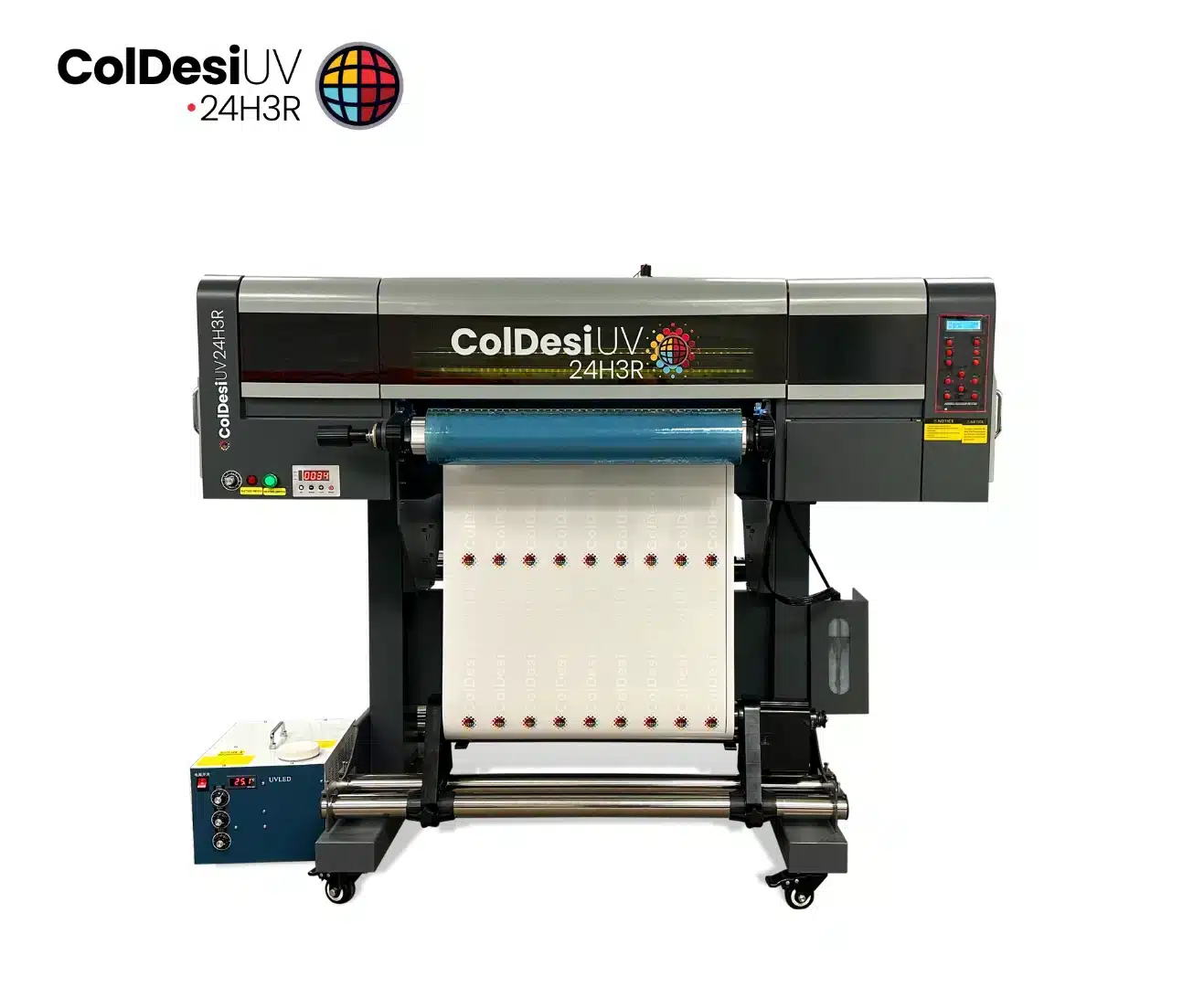
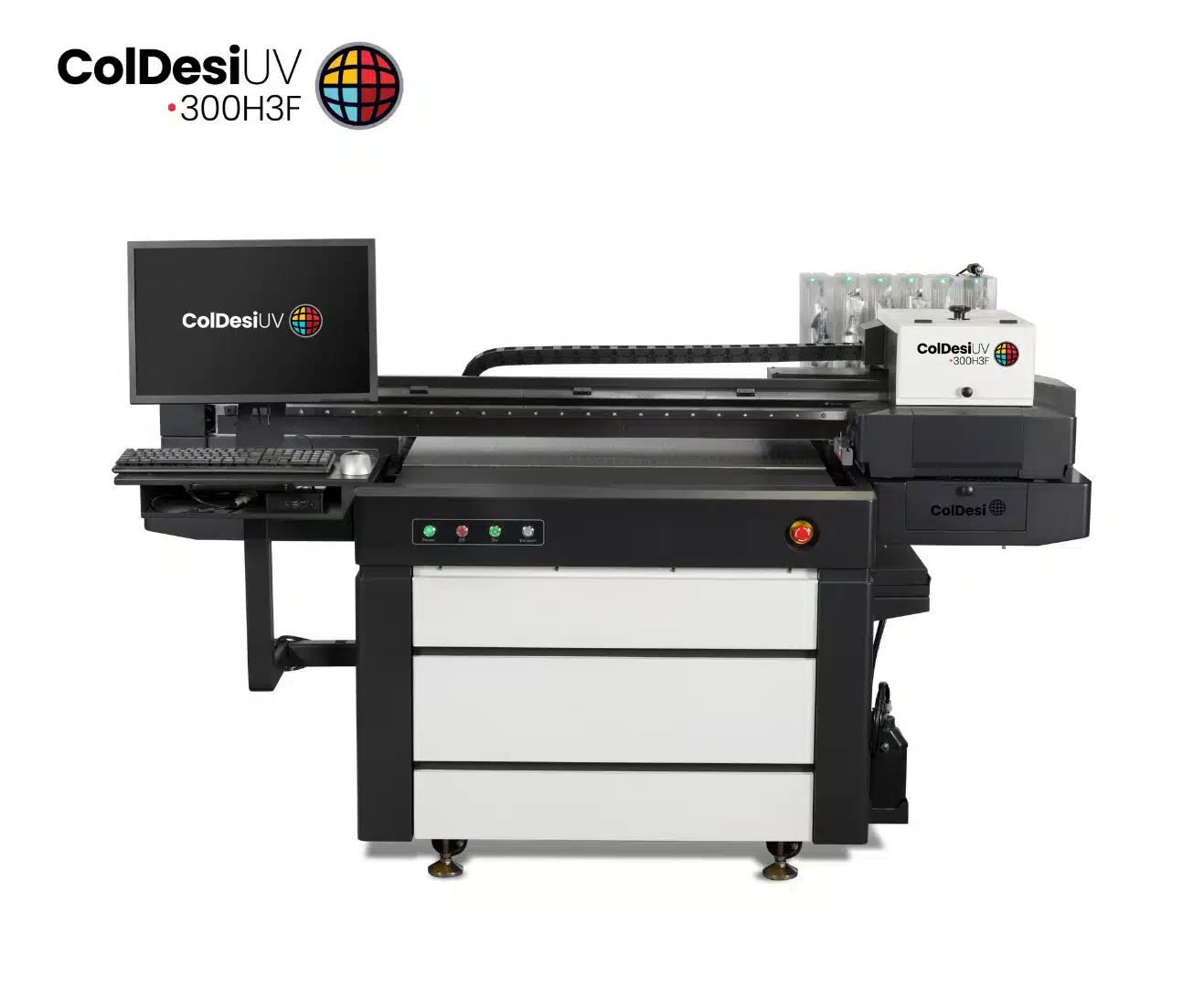
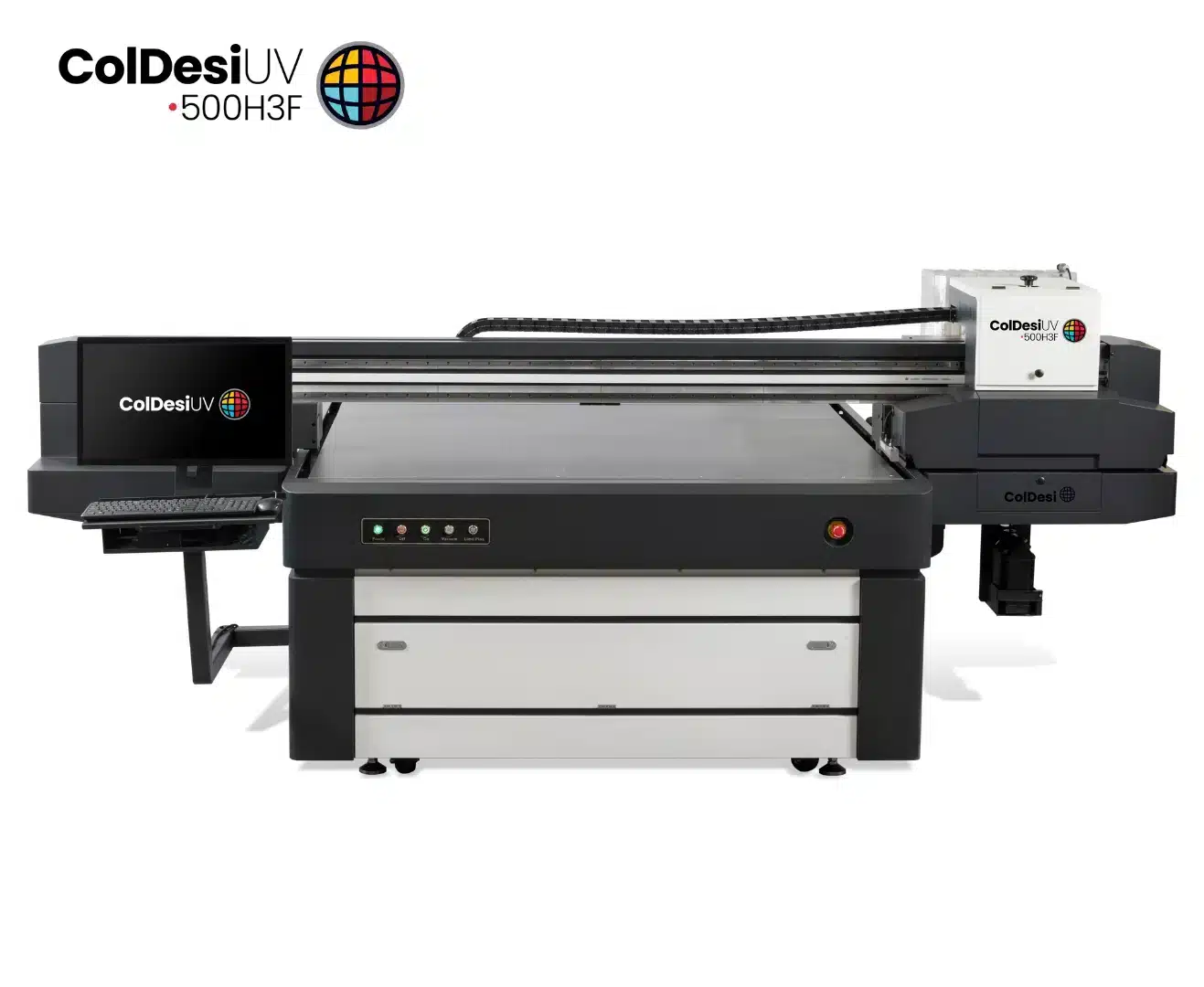
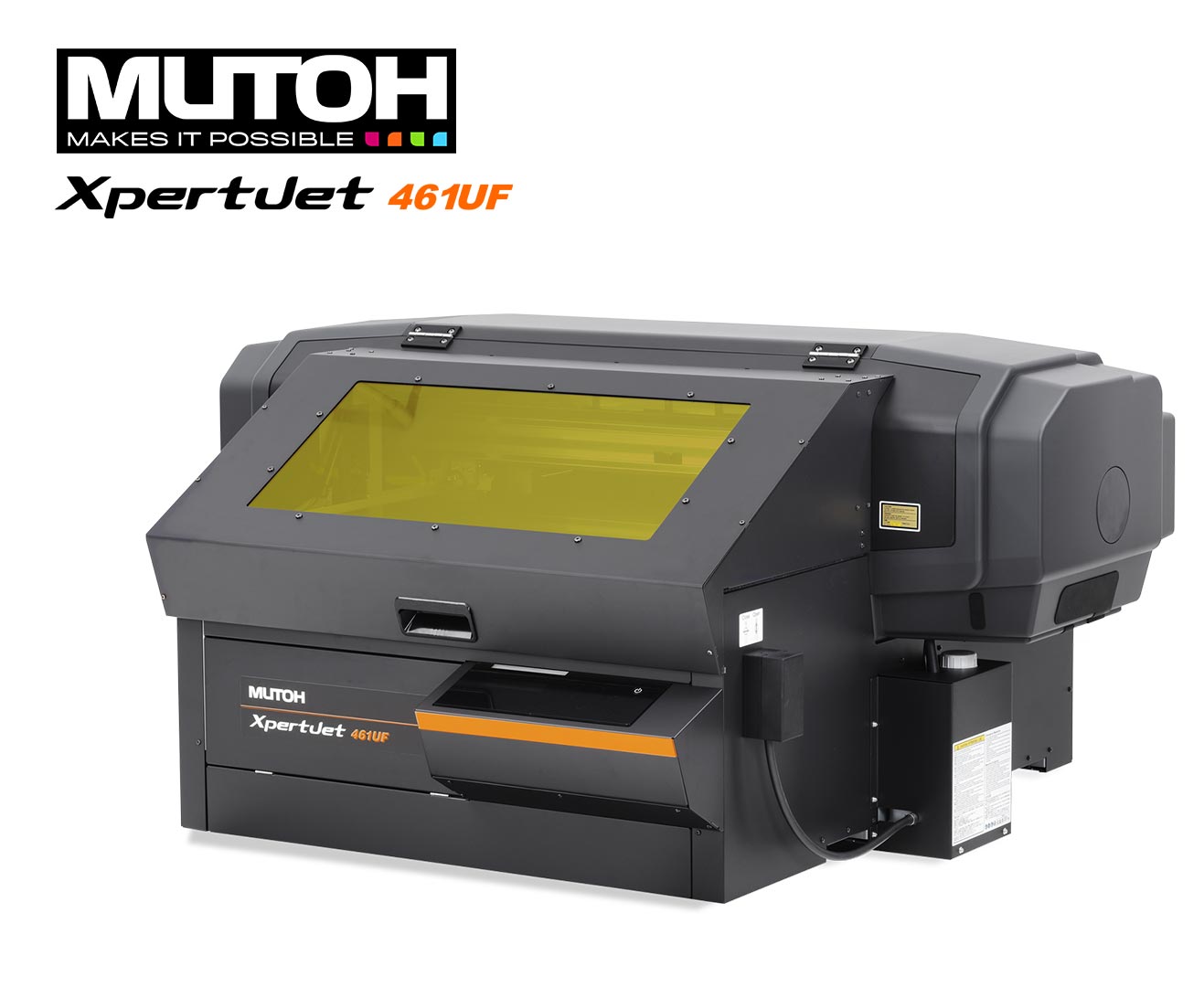
Below, you can browse ColDesi’s full range of UV flatbed printers and see what each machine has to offer.
Click through to learn more about each one and find the machine that fits your needs.
Each printer offers something different.
The question is simply: Which one is right for YOU?