

For apparel decorators, growth often means finding ways to produce more, expand what you can offer customers, improve turnaround times, and keep more production under your control. DTF printing for apparel businesses can help accomplish those goals.
DTF printing allows businesses to create full-color transfers that can be applied to a wide variety of apparel. For screen printers, embroidery businesses, heat transfer shops, promotional product companies, and other apparel decorators, DTF can complement existing production methods while creating new opportunities.
But adding DTF isn’t simply about buying a printer.
The right DTF solution needs to fit your customers, order volume, production space, labor, existing equipment, and plans for growth. Before investing, there are several important factors to consider.
Why Are Apparel Businesses Adding DTF Printing?
One of the biggest advantages of DTF is flexibility.
An apparel business may encounter everything from a small full-color shirt order to hundreds of garments requiring the same design. Traditional decorating methods may work extremely well for certain jobs but become less efficient for others.
Adding DTF gives decorators another production option.
Depending on your business and applications, DTF printing can help you:
- Produce detailed, full-color designs
- Handle short- and medium-run orders
- Produce transfers for multiple garment types and colors
- Reduce setup requirements for certain jobs
- Accommodate frequent artwork changes
- Offer personalized apparel
- Improve turnaround times
- Keep more production in-house
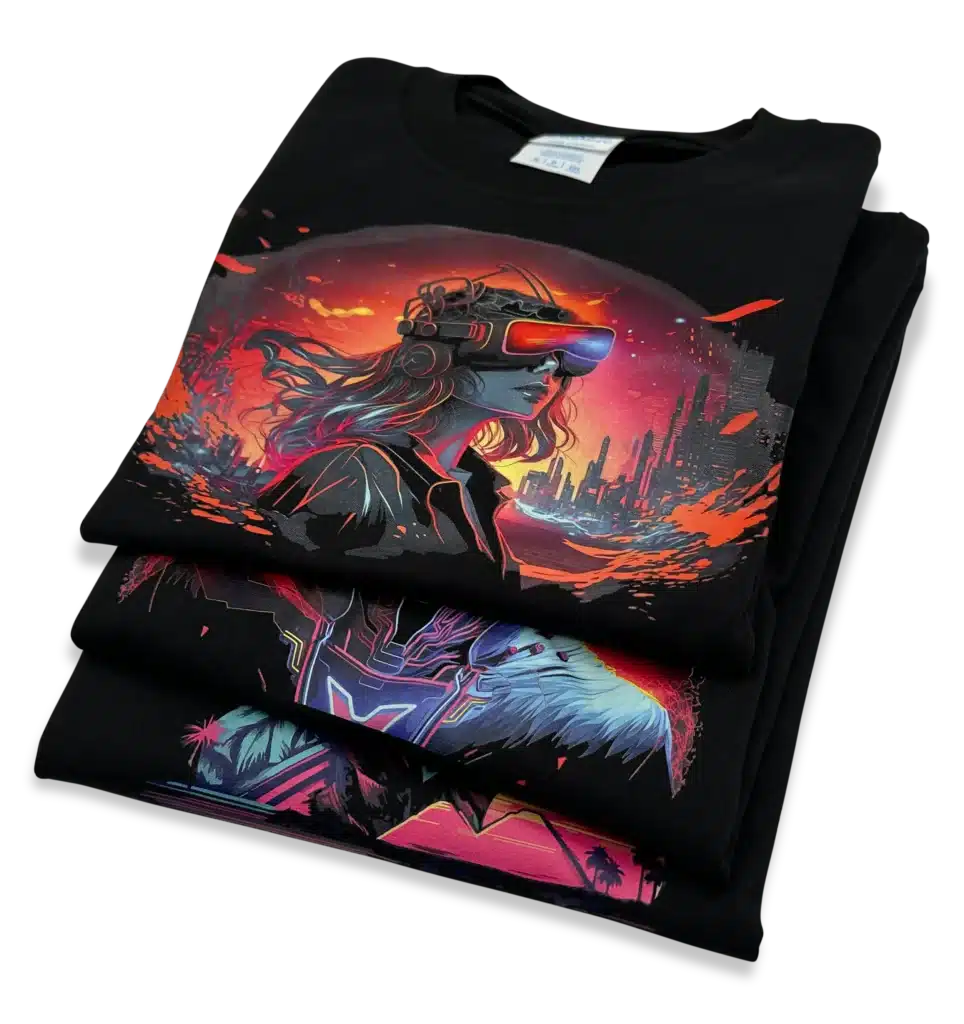
For an established decorator, the question isn’t necessarily whether DTF should replace screen printing, embroidery, or another process.
A better question is: Where can DTF make your existing business more capable and efficient?
Look at the Orders You're Already Receiving
Before investing in DTF equipment, examine your current customers and order history.
- Which jobs are profitable?
- Which are difficult to produce efficiently? What work are you outsourcing?
- More importantly, what orders are you currently turning away?
You may already have demand for DTF without realizing it.
For example, customers may be requesting smaller quantities of full-color apparel, more personalization, faster turnaround, or artwork that doesn’t fit efficiently into your current production process.
In those situations, DTF can provide another way to fulfill the order without abandoning the decorating methods your business already does well.
This is why evaluating DTF printing for an apparel business should begin with the work you’re already producing not the printer.
For screen printing businesses, DTF can complement existing production rather than replace it.
See how DTF can help you take on different order types while continuing to use the equipment and processes already working for your business. READ MORE
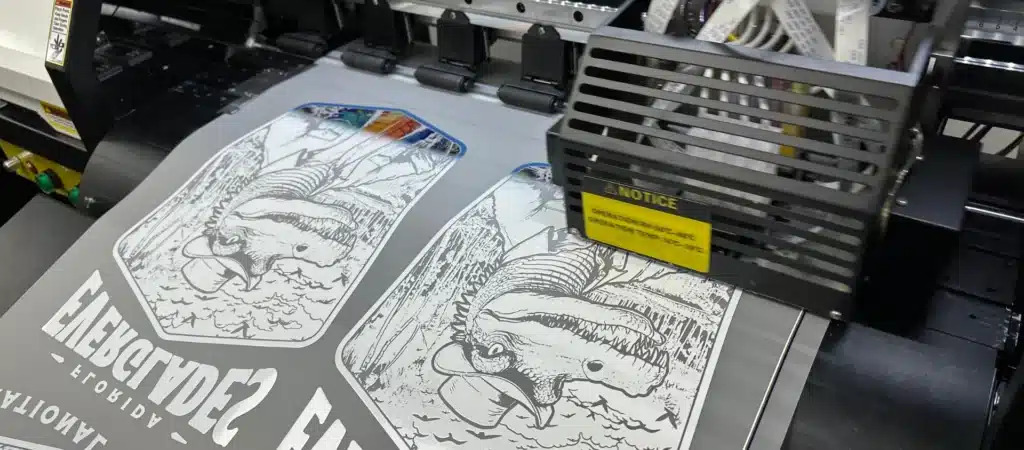
Buying DTF Transfers vs. Printing DTF Transfers In-House
You don’t necessarily need to purchase a DTF printer to begin selling DTF-decorated apparel.
Many businesses start by purchasing finished DTF transfers and applying them with a heat press. This allows a shop to test demand and add DTF products without immediately investing in printing equipment.
As transfer volume increases, however, it may make sense to consider bringing DTF printing in-house.
Buying DTF Transfers
Outsourcing may make sense when your transfer volume is relatively low or inconsistent. It can also provide a lower-cost way to determine whether your customers are interested in DTF products.
Producing DTF Transfers In-House
As volume increases, in-house production can provide greater control over:
- Production schedules
- Transfer costs
- Turnaround times
- Quality control
- Rush orders
- Artwork testing
- Inventory
- Production capacity
The right point to bring production in-house will be different for every business.
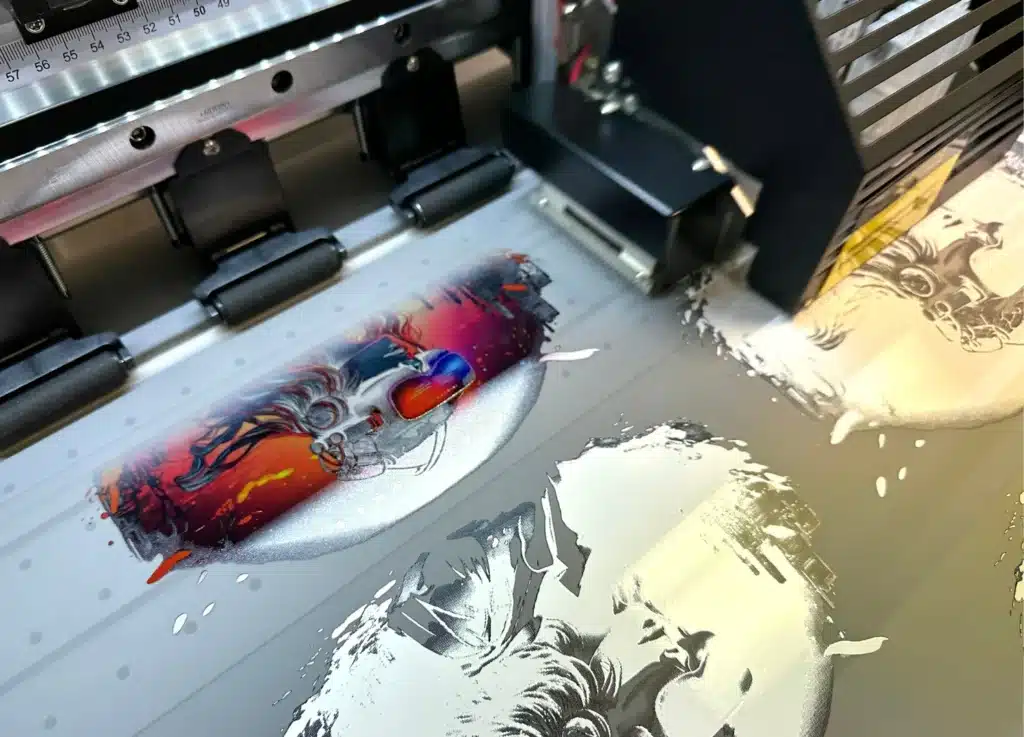
ColDesi can help apparel decorators evaluate expected volume, current transfer costs, labor, equipment requirements, and growth goals to determine whether purchasing a commercial DTF printer makes sense.
Not sure when it makes sense to stop outsourcing transfers and bring DTF production in-house?
Compare the costs, production advantages, and profit considerations of both approaches. LEARN MORE
How to Choose a DTF Printer for an Apparel Business
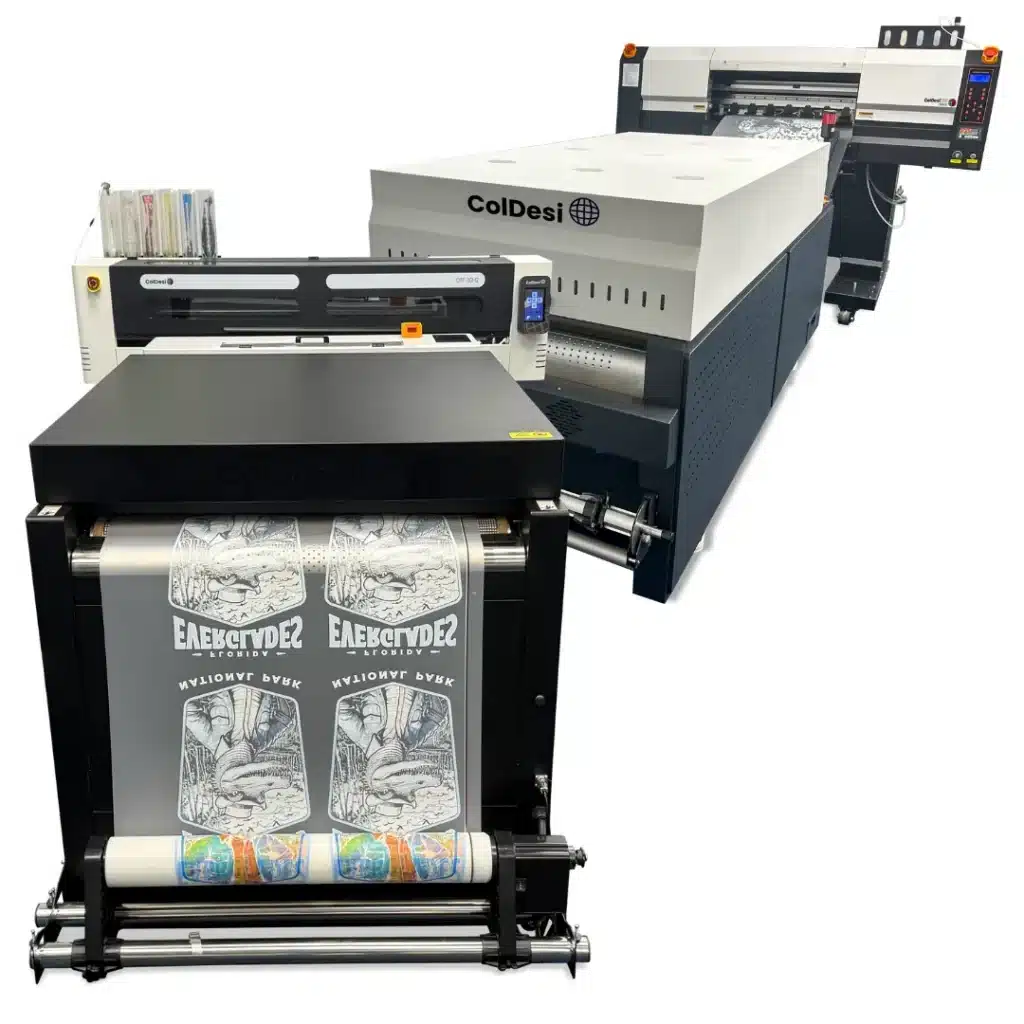
There is no single DTF printer that’s right for every apparel decorator.
A startup producing occasional orders has very different requirements from an established shop processing hundreds of garments per day.
Instead of starting with price, start with production.
Ask:
How much DTF production does my business realistically need?
Then consider:
- Print width
- Printing speed
- Printer and dryer footprint
- Electrical requirements
- Expected daily transfer volume
- Available labor
- Maintenance requirements
- Heat press capacity
- Workflow automation
- Future production requirements
Buying too much capacity can unnecessarily increase your initial investment. Buying too little can create a production bottleneck as the business grows.
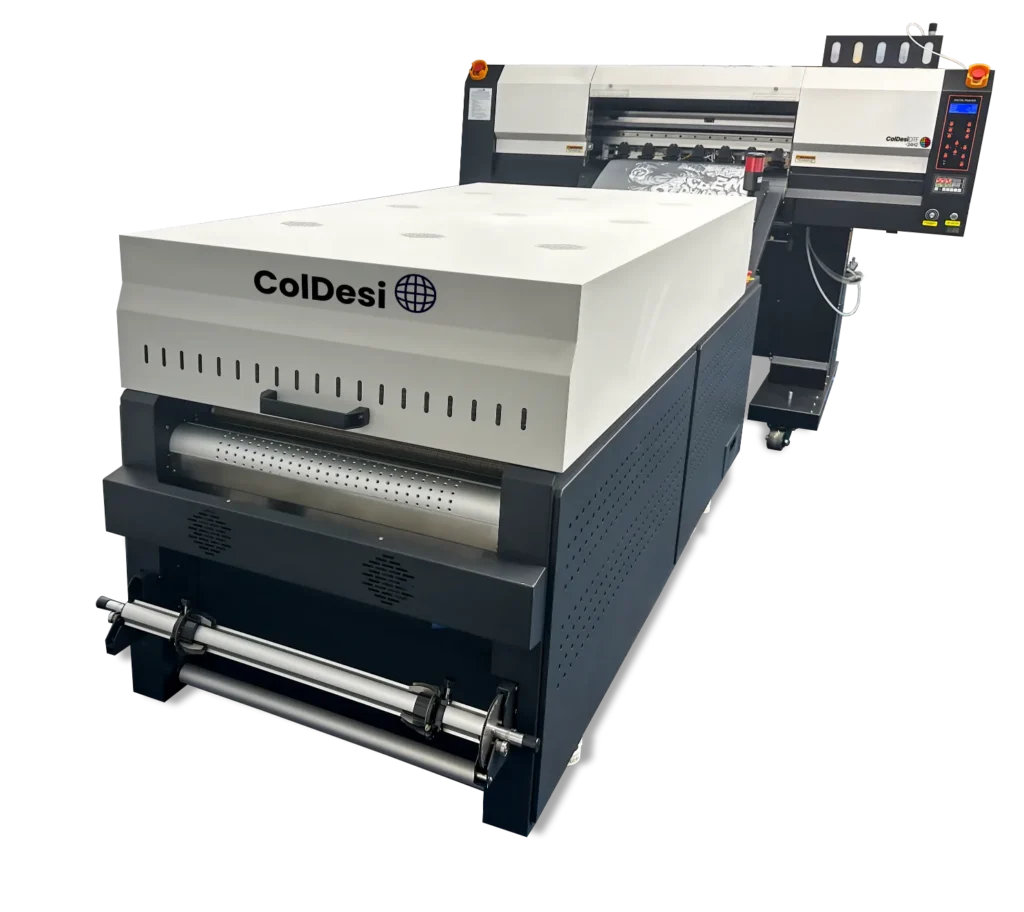
ColDesi offers a range of commercial DTF printer and dryer solutions designed for different production requirements. This allows businesses to evaluate DTF equipment based on their actual needs rather than trying to fit every operation into the same system.
Don't Evaluate the DTF Printer Alone
When researching DTF printing for apparel businesses, it is easy to focus almost entirely on printer specifications.
But the printer is only one part of DTF production.
A complete workflow can include:
Artwork → Printing → Powder Application → Curing → Transfer Handling → Heat Pressing → Finishing → Fulfillment
Each stage affects overall productivity.
A faster printer, for example, doesn’t necessarily mean more finished shirts if your heat press operation cannot keep up with transfer production.
As order volume increases, small workflow inefficiencies can become significant production bottlenecks.
That is why ColDesi looks at DTF as a complete production process. Commercial DTF printers and dryers can be combined with heat presses and production automation to create a workflow designed around the volume a business needs to produce.
The objective isn’t simply to print transfers faster.
The objective is to produce finished, sellable apparel efficiently.
Understand the Cost of Bringing DTF Printing In-House
The price of the equipment is only one part of the cost of commercial DTF printing.
Businesses should also account for ongoing expenses such as:
- DTF ink
- Film
- Powder
- Cleaning and maintenance supplies
- Labor
- Blank apparel
- Equipment maintenance
- Waste
- Electricity
- Packaging
- Shipping
- Overhead
Understanding these costs helps determine the true cost per transfer or finished garment.
That information is particularly important when comparing outsourced transfers with in-house DTF production.
The lowest equipment price does not automatically result in the lowest production cost.
Productivity, reliability, labor requirements, consumable costs, support, and downtime can all affect the long-term economics of a DTF operation.
The purchase price is only one part of a DTF investment.
Take a closer look at production costs, potential revenue, and the factors that can determine whether DTF makes financial sense for your business. READ MORE
Make Sure DTF Supplies Are Readily Available
Consumables are essential to DTF production.
Film, ink, powder, cleaning supplies, and replacement components need to be available when your business needs them.
A printer cannot generate revenue if production stops because an essential supply isn’t available.
When comparing DTF equipment suppliers, ask:
- Are DTF inks, films, and powders consistently available?
- How quickly can supplies be shipped?
- Are replacement parts available?
- What maintenance products will I need?
- Who do I contact if there is a production problem?
The relationship with your equipment supplier becomes especially important once DTF becomes part of your daily production schedule.
Training and DTF Technical Support Matter
DTF printing requires more than loading artwork and pressing a button.
Artwork preparation, environmental conditions, printer operation, maintenance, curing, heat pressing, and garment preparation can all influence results.
There will be a learning curve.
That makes training and technical support important considerations when choosing where to purchase a commercial DTF system.
Ask potential equipment providers what happens after the equipment arrives.
- Who helps install the system?
- What training is provided?
- Who helps your employees understand the workflow?
- Who do you contact when you have a technical question?
ColDesi supports customers beyond the initial equipment purchase with onboarding, training, technical support, DTF supplies, and resources designed to help businesses move from equipment installation into production.
Price DTF Apparel for Profitability
Adding DTF printing creates new revenue opportunities, but additional sales only help your business if those orders are profitable.
Before establishing pricing, calculate the true production cost.
That should include materials, labor, equipment, overhead, waste, packaging, and other expenses associated with fulfilling the order.
Then determine the margin your business needs.
You do not necessarily need to be the lowest-priced apparel decorator in your market.
Customers may also value:
- Fast turnaround
- Consistent print quality
- Reliable service
- Low minimum quantities
- Customization
- Design capabilities
- Convenient ordering
- Dependable delivery
DTF should create opportunities to generate profitable production, not simply more production.

Plan Your DTF Operation for Future Growth
What happens if DTF becomes one of your fastest-growing decorating methods?
That’s a good problem to have but it’s worth considering before selecting equipment.
Think beyond your immediate production requirements.
- Could your operation accommodate additional heat presses?
- Would you need another employee?
- Could automation reduce manual production steps?
- Is there enough room for additional equipment?
- Could your current DTF printer keep up if order volume doubled?
Scalability is particularly important for established apparel decorators.
The goal should be to create a DTF workflow that can grow with your business rather than becoming the next production bottleneck.
Why Apparel Businesses Choose ColDesi for DTF Printing
Choosing commercial DTF equipment is about more than comparing specifications and purchase prices.
It is about finding a production solution that makes sense for your business.
ColDesi brings decades of experience in the apparel customization industry and has helped businesses adopt new decorating technologies, expand production, and build more efficient workflows.
Our approach starts by understanding the operation.
- What do you currently produce?
- What types of orders are you trying to add?
- How much production do you need?
- How much space do you have?
- What equipment are you already using?
- Where are the bottlenecks?
- Where do you want the business to go next?
From there, ColDesi can help evaluate a DTF solution around those requirements.
And because DTF production extends beyond the printer, ColDesi can support the broader workflow with commercial DTF printers and dryers, heat presses, production automation, consumables, training, technical support, and additional apparel customization technologies.
Is DTF Printing Right for Your Apparel Business?
DTF printing for apparel businesses can provide an effective way to expand capabilities, bring more production in-house, improve turnaround times, and serve a wider range of customer requests.
But the best DTF investment isn’t necessarily the fastest printer or the least expensive system.
It’s the solution that fits your production requirements today while giving your business room to grow tomorrow.
Before investing, understand your customers, order volume, production costs, available space, labor requirements, current workflow, and future capacity needs.
Then choose an equipment provider capable of helping you look at the complete picture.
Ready to explore DTF printing for your apparel business?
Fill out the form below to talk with a ColDesi equipment specialist about your current production, goals, and growth plans. We’ll help you evaluate your options and determine which DTF solution makes sense for your operation.