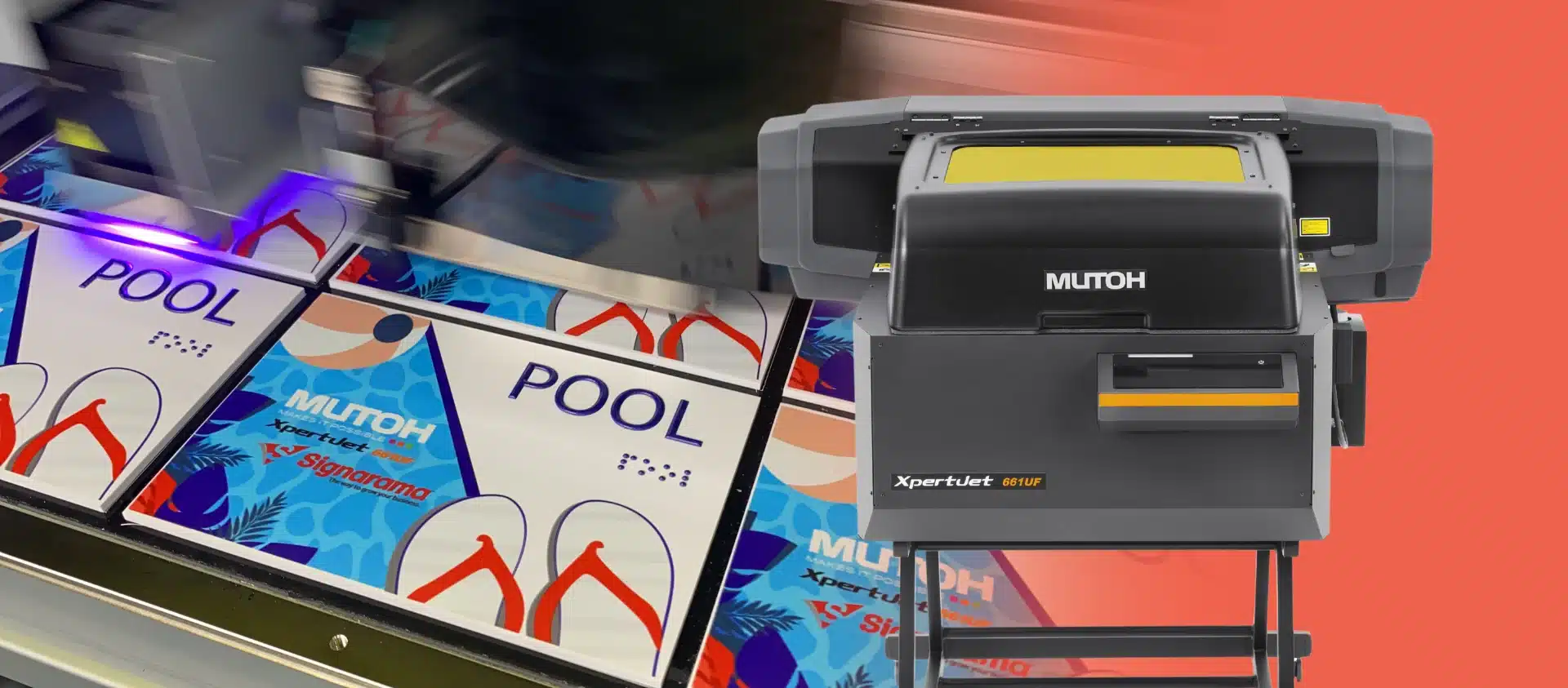
ADA-compliant Braille signage can be a highly profitable opportunity for your business. However, if you are relying on traditional production methods, you are wasting time and money. Techniques like inlaid applique, compression-formed ADA, and photopolymer have long been used for ADA signage. They are often labor-intensive, expensive, and require specialized equipment and skilled labor. As a result, sign shops often outsource jobs, increasing costs and turnaround times.
ColDesi provides a solution with the MUTOH XPJ-661UF and XPJ-461UF UV-LED printers. These printers are engineered for ADA-compliant Braille printing. They produce accurate, regulation-compliant signage with greater efficiency and profitability.
When it comes to producing ADA-compliant Braille signage, accuracy is non-negotiable. ADA standards require braille signage to meet strict height, shape, and tactile regulations. For sign businesses seeking to meet ADA legal requirements, investing in a compliant UV printer for Braille production is essential.
ADA-Compliant Braille Signage Standards and Requirements
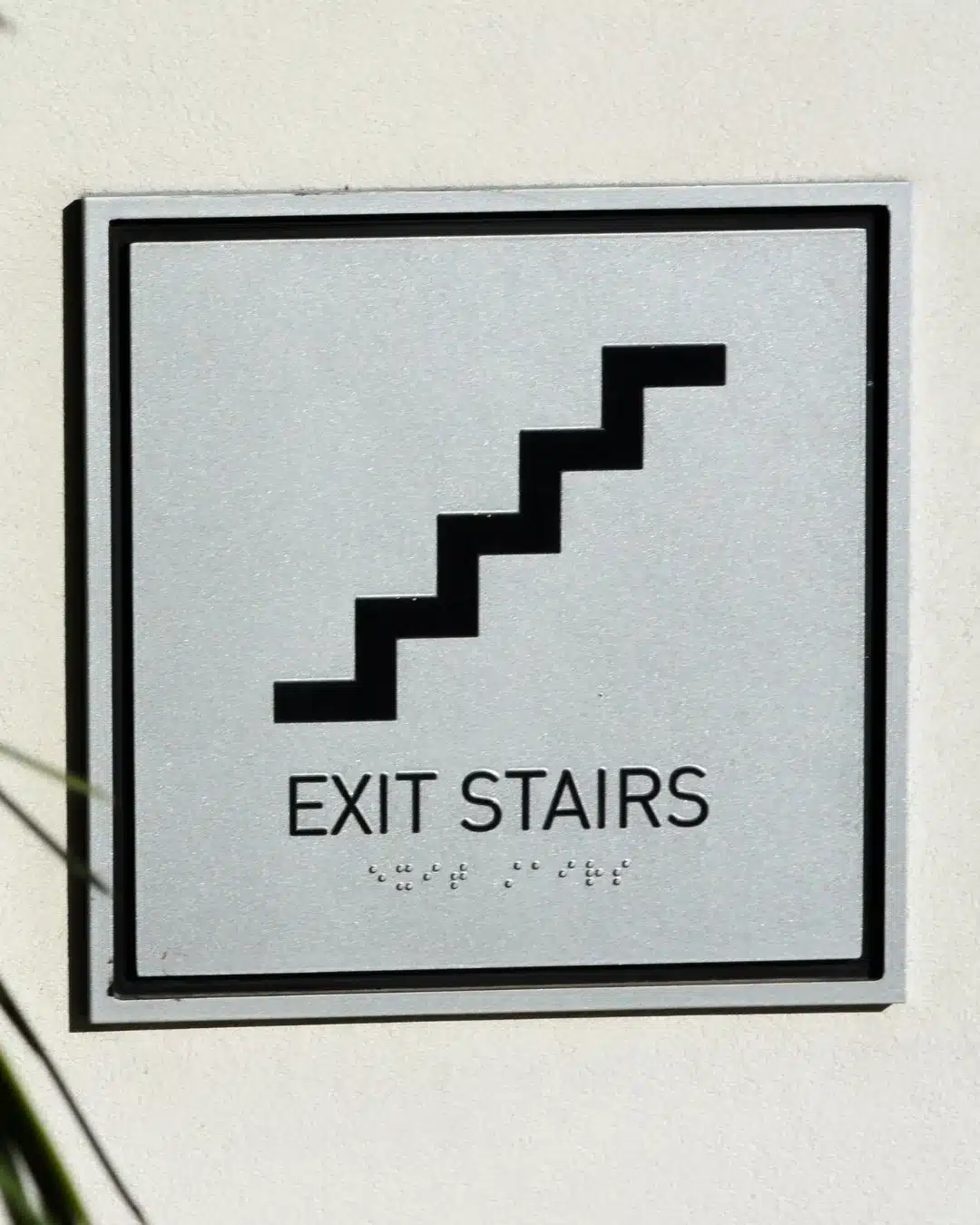
ADA compliance refers to adherence to the standards set by the Americans with Disabilities Act. It ensures accessibility for individuals with disabilities. For Braille to be considered ADA-compliant Braille signage, it must meet federal guidelines on:
- Braille dimensions and placement
- Tactile lettering specifications
- Character height and font requirements
- Mounting height and wall location
- Surface finish, contrast, and glare control
How UV Printing Supports ADA-Compliant Braille Signage Compliance
The Americans with Disabilities Act and Signage Compliance
- Office complexes
- Hospitals and healthcare facilities
- Hotels and hospitality venues
- Educational institutions
- Government buildings
|
Specifications
|
ADA Requirement
|
|---|---|
|
Braille Type |
Grade 2 Braille |
|
Braille Dot Shape |
Rounded, domed dots |
|
Dot Height |
.025 to .037 inches (0.6 mm to 0.9 mm) |
|
Dot Base Diameter |
.059 to .063 inches (1.5 mm to 1.6 mm) |
|
Inter-dot Spacing |
Horizontal: 0.090 inches (2.3 mm); Vertical: 0.241 inches (6.1 mm) |
|
Tactile Letter Height |
5/8 inch to 2 inches (16 mm to 50 mm) |
|
Finish |
Non-glare |
|
Contrast |
Characters must contrast with background (light-on-dark or dark-on-light) |
How the Mutoh XPJ-661UF and XPJ-461UF UV Printers Achieve ADA Compliance
The MUTOH 661UF and 461UF printers, available through ColDesi, meet ADA signage requirements. Key features include:
- Accurate Layered Printing: Precisely layered UV ink droplets meet the required height standards for ADA-compliant Braille.
- Compliant Domed Dot Formation: Controlled droplet placement ensures the rounded dot shape necessary for Braille readability.
- RIP Software: Supports multi-layer printing with exceptional accuracy and repeatability for tactile elements.
- Local Dimming Control (LDC): Allows for selectable surface finishes (matte, semi-gloss, gloss) to conform to ADA non-glare requirements.
- Vacuum Table and Automatic Height Adjustment: Ensures proper substrate alignment and printhead clearance, maintaining tactile feature accuracy on every print.
For a deeper look at how UV printing is transforming Braille sign production, check out our article “Printing Braille Signage with UV Printers.” It covers the limitations of traditional ADA signage methods and explains how UV-LED printers like the MUTOH XPJ series offer a faster, more cost-effective way to produce accurate, ADA-compliant Braille signs in-house.
Purpose-Built for Streamlined ADA-Compliant Braille Signage Production
- Single-Step Output: Prints raised Braille dots, tactile text, and full-color graphics in one automated process.
- Advanced Local Dimming Control (LDC): Enables multiple finishes, enhancing both visual clarity and tactile feedback.
- Precision Height Management: Maintains consistent media height for accurate Braille dot formation, ensuring regulatory compliance.
- Versatile Media Compatibility: Manages thick materials, including acrylic, plastics, wood, and aluminum.
- Integrated RIP Workflow: Automates layering, supports color mapping, and allows multi-page processing for high-volume output.
Comparing UV Printing vs. Traditional Braille Fabrication
|
Method
|
Fabrication Process
|
Dry Time
|
Components
|
Setup Cost
|
Durability
|
Production Cost
|
|---|---|---|---|---|---|---|
|
UV-LED (MUTOH XPJ-661UF) |
Digital printing |
None |
Substrate & Ink |
No added cost |
High |
Low |
|
Raster |
Drilling, inserting beads, painting |
In some cases |
Substrate, Raster beads, Ink/Paint |
Medium |
High |
Medium |
|
Photopolymer |
Film generation, multiple steps |
In some cases |
Substrate, Film, Topcoat, Pain |
High |
Medium |
High |
Ideal Markets for ADA Braille Printing
- Sign Shops – Room signs, wayfinding, and packaging prototypes
- Trophy & Award Providers – Badges, plaques, and personalized awards
- Promotional Product Suppliers – Custom items with raised text and Braille
- Educational Institutions – Compliant signs for navigation and room IDs
Optimize Compliance and Drive Business Growth
ADA-compliant Braille signage offers a valuable opportunity for business expansion. Traditional Braille fabrication methods are often labor-intensive and costly. This often leads sign shops to outsource production and reduce profit margins.
The Mutoh XPJ-661UF and XPJ-461UF UV-LED printers, available through ColDesi, provide a streamlined, cost-effective alternative. Designed for precision and productivity, these printers enable direct, single-step production of ADA-compliant signage with consistent accuracy and minimal manual labor.
Discover how ADA-compliant Braille signage can transform your business—connect with ColDesi today. Fill out the form below or call 877-793-3278 to learn more.


