The Profit Potential of ADA Braille Signage
What if there was a way to increase the selling price of a sign by a factor of 2-10 times? Would that be of interest to you? Well, there is such a way. ADA Braille signage offers a powerful way to increase the selling price of a sign by as much as 10 times the amount of a standard sign of the same size, on the same material, with the same basic graphics. And here is a good thing: in almost all instances, your customer must have these signs.
In many cases, ADA signage isn’t optional; it’s a required line item in construction budgets. That means you’re not competing on price as much as you are on reliability, turnaround time, and compliance accuracy.
Why ADA Braille Signage Is Required
The Americans with Disabilities Act was passed and signed into law in 1990 and fully implemented two years later. Revisions and more specific signage guidelines were put into place in 2012. Basically, all new construction that is considered public, including private businesses, must meet ADA requirements, including proper ADA Braille signage for accessibility compliance. Major remodels also require such signage.
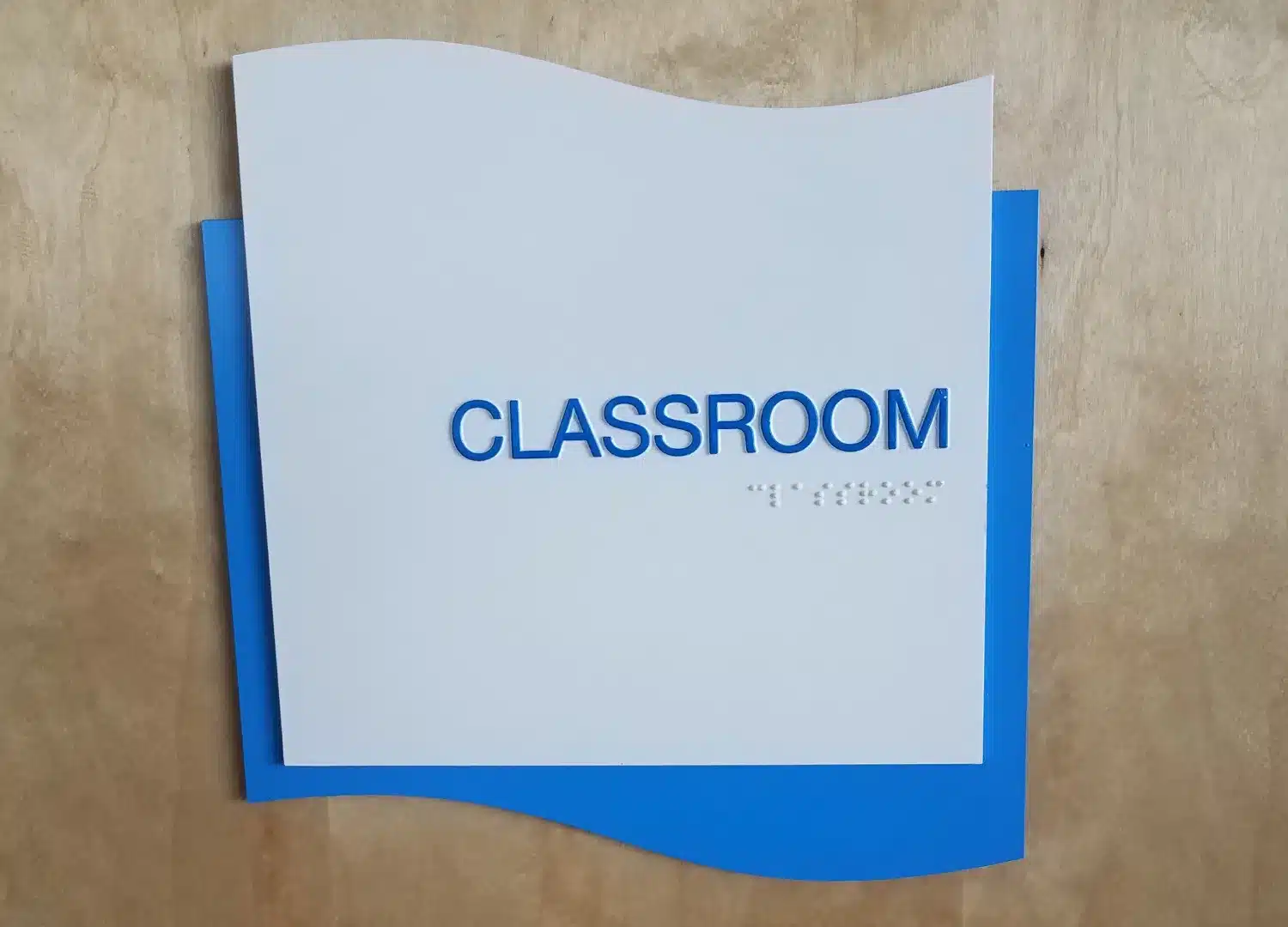
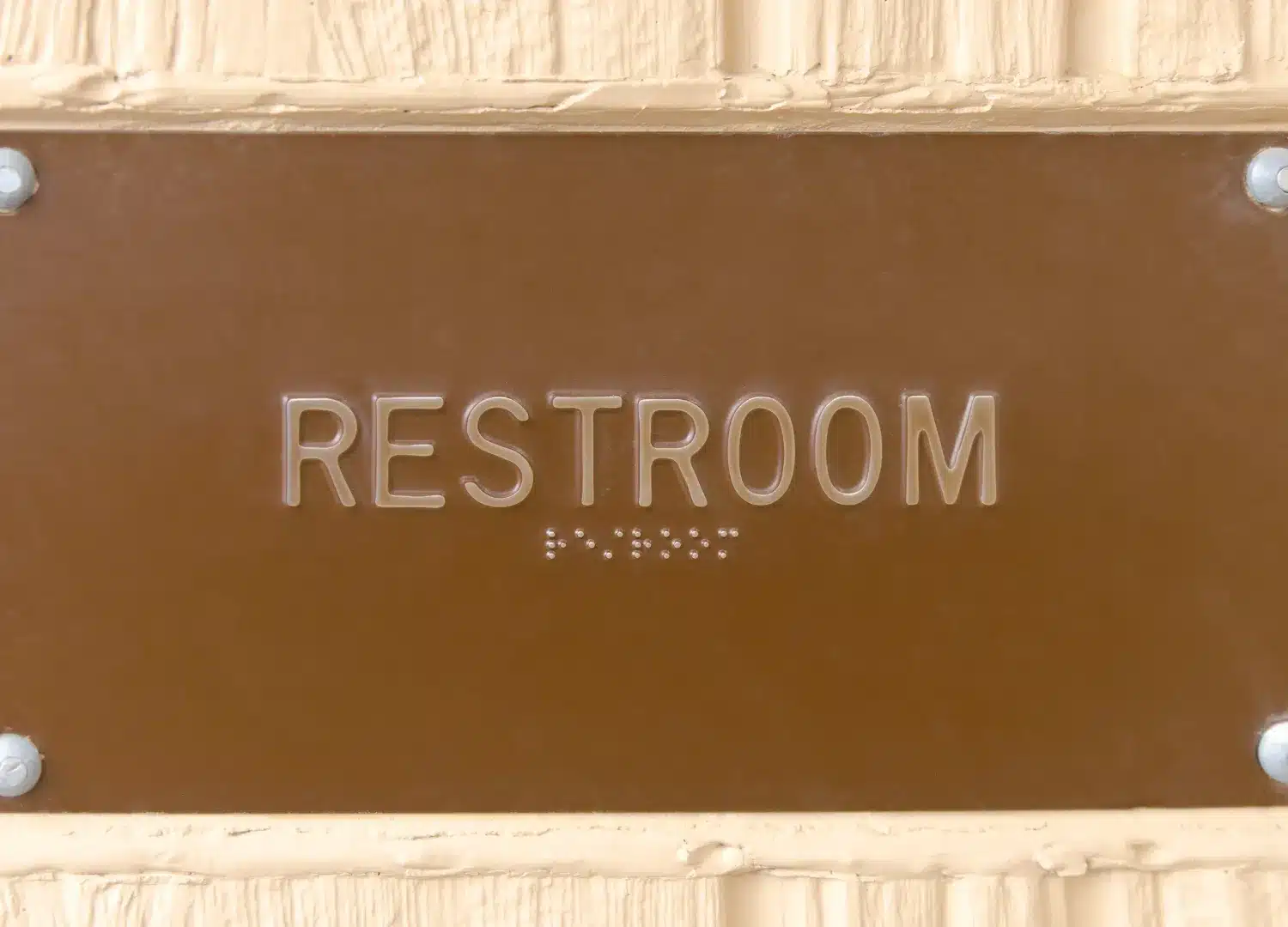
ADA-compliant signage isn’t just about adding Braille. There are very specific requirements around:
- Character height and spacing
- Grade 2 Braille translation
- Tactile letter depth (raised 1/32 inch minimum)
- Contrast ratios between text and background
- Mounting height and placement on walls
Producing ADA Braille Signage with UV Flatbed Printers
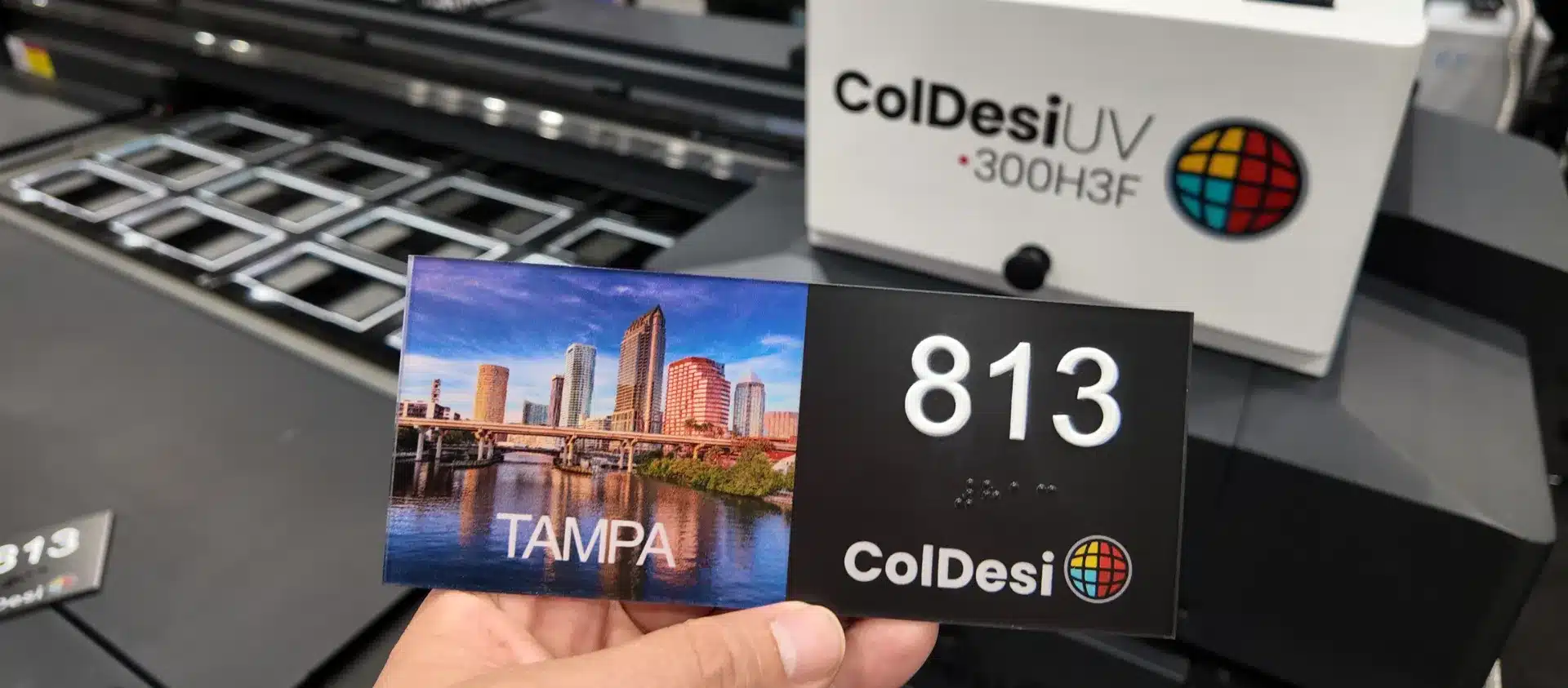
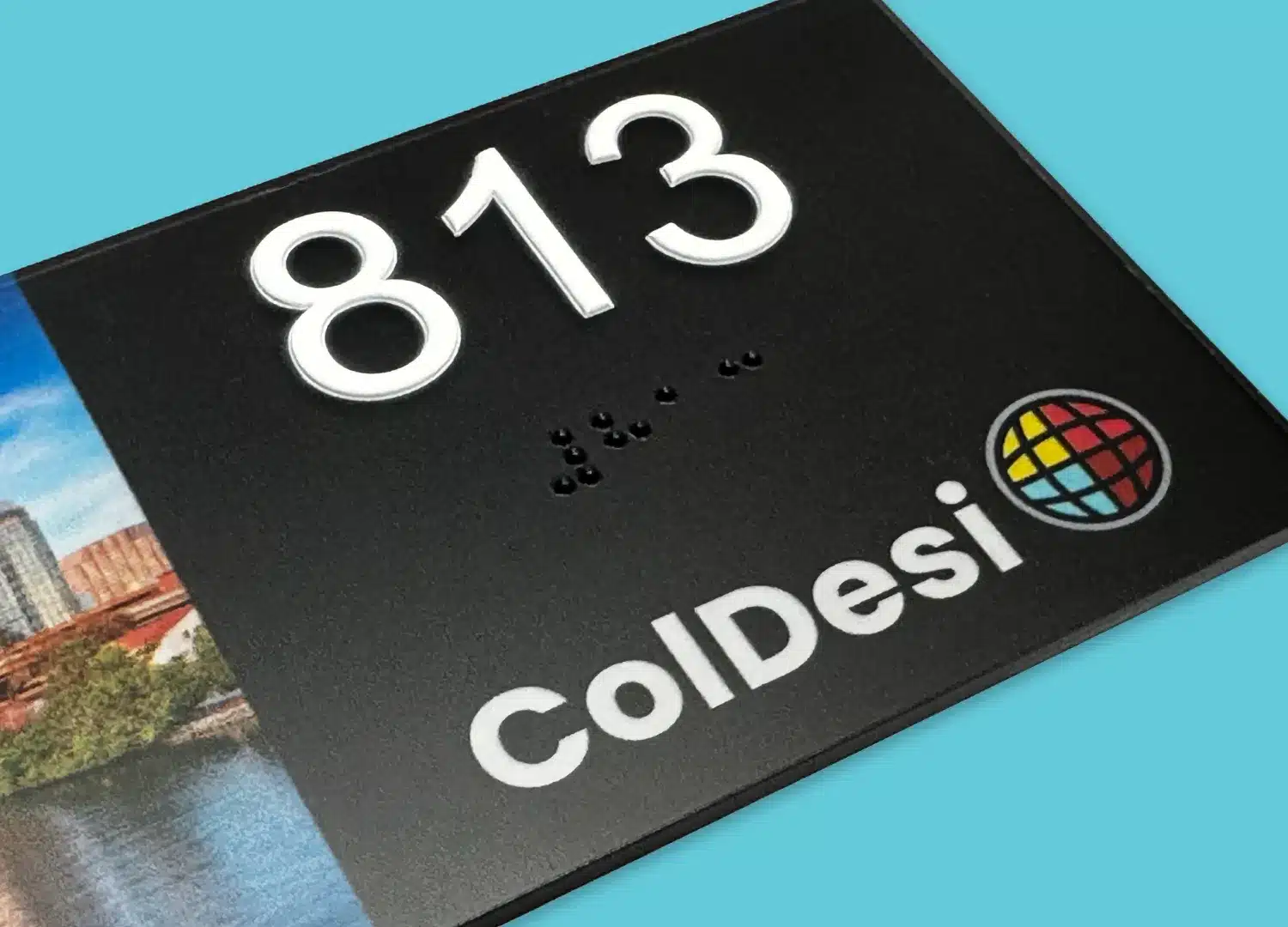
The beauty of it is that many UV-flatbed printers, like the ColDesi 300H3F, can quickly and accurately produce these signs. UV flatbed printers are uniquely suited for ADA Braille signage because they can produce precise, repeatable layers of ink required to meet tactile height standards, without the need for secondary processes like routing or applying beads.
Compared to traditional fabrication methods, direct printing allows for tighter registration, faster turnaround, and easier scalability, especially for projects involving hundreds of unique signs.
Using Variable Data for Efficient Production
Variable data abilities in the sophisticated design and RIP (raster image processing) software included with such machines can help to streamline the artwork side of sign manufacturing. Imagine how long it would take to create custom room number signs with the appropriate tactile and Braille characters for a hotel with 600 rooms! This is where many shops either gain efficiency or lose profitability. Without variable data workflows, producing hundreds of unique ADA signs becomes labor-intensive and error-prone. Instead, with the proper software, this task is simple, such as setting up a proper template to work from and then running the variable data and/or serialization function incorporated in the design or RIP package.
ColDesi customers often leverage built-in RIP software tools to automate numbering, naming, and Braille translation by reducing production time from days to hours while maintaining compliance accuracy.
Pro Tip: Always validate Braille translations before batch production. Even with automation, a single translation error across a large run can result in costly reprints.
Additional Revenue from Installation Services
Another aspect of ADA/Braille signage that can be a boon to your revenue stream is the fact that many of the orders you get will include installation. Charging $5-10 per sign for installation can add serious dollars to your bottom line, as well as establishing your business as a full-service go-to for your clients. Your expertise in creating and properly installing ADA Braille signage will open the door to many, often large, new clients.
Proper installation is also part of ADA compliance. Signs must be mounted at specific heights (typically 48–60 inches to baseline) and positioned consistently relative to doors. This creates an opportunity for knowledgeable providers to charge not just for labor but for compliance assurance.
Many ColDesi customers find that offering installation services significantly increases project value while strengthening long-term client relationships.
Recurring Revenue from ADA Signage
One more thing: ADA Braille signage is often not a “one and done” scenario. Facilities experience constant change, room renumbering, tenant turnover, rebranding, and damage all create ongoing demand for replacement signage. Ongoing maintenance and replacement of damaged, stolen, or worn signs can be a revenue stream as well. Not to mention the fact that it keeps your business card near the top of the Rolodex for when any other types of signage may be needed!
Shops that establish themselves early as the ADA signage provider for a facility often become the default partner for all future signage needs.
Becoming an ADA Signage Expert
Becoming an ADA signage expert doesn’t just mean understanding how to produce signs; it means understanding how to guide your customers through compliance. It is certainly worth the time to become educated in the requirements of ADA Braille signage. Your value to potential clients multiplies when you can clearly and concisely offer professional consultation on the what, where, and how of this necessary but potentially confusing process. Add to this your ability to produce not only functional but also attractive signs, and income potential escalates.
Many business owners, contractors, and property managers are unsure about ADA requirements. When you can confidently advise on what signs are needed, where they should be placed, and how they should be produced, you move from vendor to trusted advisor.
At ColDesi, we emphasize not just the equipment, but the knowledge needed to succeed in markets like ADA signage, because the real opportunity isn’t just printing signs; it’s owning the expertise behind them.
When you combine compliant production, efficient workflows, and expert guidance, ADA Braille signage becomes more than a product; it becomes a high-margin, repeatable business strategy.


