

Choosing a commercial DTF printer is no longer simply a matter of comparing printing speeds and equipment prices. With manufacturers offering different printhead technologies, color configurations, production capacities, and automation options, businesses need to understand what separates one system from another.
For established apparel decorators, the right DTF equipment can expand production capabilities and help manage growing order volumes.
But how do commercial DTF printer brands compare?
This DTF printer comparison examines equipment from ColDesi, Epson, Mimaki, Roland DG, Brother, STS, and M&R, highlighting the differences that matter when investing in a commercial DTF printing system.
DTF Printer Manufacturer Comparison
Compare leading DTF printer manufacturers, equipment configurations, and production advantages.
| Manufacturer | Representative Models | Technology & Configuration | Main Differentiator |
|---|---|---|---|
| ColDesi | 12H2, 19H2, 24H2, 30H2, 24H4, 24H5, 24H6, 24H6E | Multi-printhead configurations with integrated printing and curing workflows | Broad production range with complementary automation equipment |
| Epson | SureColor G6070, G9070 | PrecisionCore Micro TFP technology and automated maintenance | Wide-format printing and proprietary print technology |
| Mimaki | TxF150-75, TxF300-75, TxF300-1600, TxF330-800 | Dedicated DTF platforms with expanded color options on select models | Color configuration choices and print monitoring |
| Roland DG | BY2-20, TY-300i | Dedicated DTF systems with VersaWorks software | Compact and commercial equipment options |
| Brother | DTRX100 | Four Brother piezo printheads with dedicated roll DTF | Proprietary printheads and commercial roll printing |
| STS | XPD-724, XPD-924D, XPJ-1682D | Mutoh-based DTF printing platforms | Multiple configurations and production widths |
| M&R | QUATRO 44, QUATRO 68 | Four- and six-printhead configurations with integrated curing | High-production transfer manufacturing |
Models differ significantly in capacity, print width, and included equipment. This is a comparison of product offerings, not a ranking based on identical performance tests.
ColDesi DTF Printers: Production Flexibility and Automation
ColDesi offers commercial DTF printing equipment across multiple production levels, from smaller dual-printhead systems to higher-output multi-printhead configurations.
The lineup includes the 12H2, 19H2, 24H2, 30H2, 24H4, 24H5, 24H6, and 24H6E.
One important difference is the range of production capacities available. Businesses can evaluate equipment based on their existing order volume rather than purchasing a single configuration intended for every application.
For example, the ColDesi 24H6E uses six Epson i3200 print heads and is rated at more than 275 linear feet per hour under specified operating conditions, combining high-output printing with a production workflow that includes preheating and the 24POWE powder application and curing system.
ColDesi also offers equipment designed to address production bottlenecks after printing.
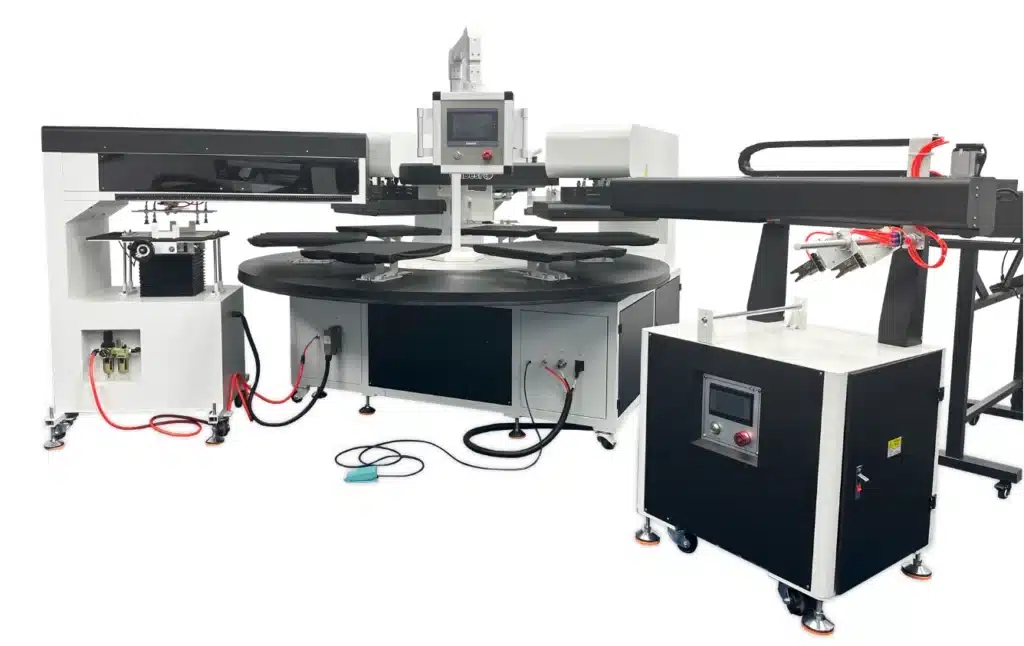
The AcroShear DTF Cutter helps automate transfer cutting, while the Dual Station Automatic Heat Press and AP360 six-station automatic heat press provide options for increasing garment application capacity.
Where ColDesi stands out: Businesses can evaluate DTF printing, curing, cutting, and heat pressing as parts of a complete production workflow, with equipment options for different production volumes.
Epson DTF Printers: Print Technology and Wide-Format Capabilities
Epson’s dedicated DTF lineup includes the SureColor G6070 and G9070.
The SureColor G6070 features a published 35.4-inch maximum printing width, PrecisionCore Micro TFP printhead technology, Nozzle Verification Technology, and automated maintenance features.
The larger G9070 extends Epson’s dedicated DTF offering into wider-format production.
One important consideration is the relationship between printer width and the equipment used to cure transfers.
For example, ColDesi offers the Epson SureColor G6070 with a 30-inch POW30 DTF dryer. Although the printer supports a wider maximum print area, the paired dryer affects the usable width of the complete production system.
This illustrates why businesses should not compare printer width alone.
Where Epson stands out: Epson offers its own printhead technology, automated maintenance features, and dedicated wide-format DTF equipment.
What buyers should compare: Usable production width, the complete printing and curing configuration, and actual output at the print settings their business requires.
Mimaki DTF Printers: Color Capabilities and Equipment Options
Mimaki offers several dedicated DTF printers, including the TxF150-75, TxF300-75, TxF300-1600, and TxF330-800.
The lineup includes different printing widths and production configurations.
One notable distinction is the TxF330-800, which supports expanded color printing with additional sky blue and pale pink inks.
For apparel decorators producing detailed artwork, fashion graphics, or designs requiring more nuanced color reproduction, expanded color options may be worth evaluating.
However, additional ink colors do not automatically mean better results for every application.
Businesses producing primarily standard logos, text, and branded apparel may have different requirements from those producing complex photographic or fashion-oriented designs.
Where Mimaki stands out: Dedicated DTF equipment with multiple production configurations and expanded color capabilities on select models.
What buyers should compare: Color requirements, ink configuration, production speed at comparable quality settings, and the cost of the complete printing and curing system.

Roland DG DTF Printers: Compact and Commercial Printing Options
Roland DG offers DTF equipment for different production requirements, including the BY2-20 and TY-300i.
The BY2-20 provides a more compact equipment option, while the TY-300i is designed for larger commercial DTF production.
Roland also offers its VersaWorks RIP software ecosystem, which supports print preparation and production management.
For businesses already familiar with Roland equipment, software compatibility and operating procedures may be considerations.
However, as with other manufacturers, buyers should confirm what is included in the equipment package.
A printer price may not include every component required for powder application, curing, and finished transfer production.
Where Roland DG stands out: A range of compact and commercial DTF configurations supported by its established software ecosystem.
What buyers should compare: Complete-system pricing, print width, production capacity, and the additional equipment required for an operational DTF workflow.

Brother DTF Printers: Dedicated Roll Printing Technology
Brother’s DTRX100 is a dedicated roll-to-roll DTF printer designed for commercial transfer production.
The system features four Brother piezo print heads and a published printable width of approximately 31.5 inches.
Unlike some equipment configurations built around widely used third-party printheads, Brother incorporates its own printing technology into the system.
For buyers, this makes service arrangements, replacement components, ink compatibility, and ongoing operating costs important areas to investigate.
Where Brother stands out: A dedicated commercial roll DTF system using Brother print head technology.
What buyers should compare: Sustained output, the complete production footprint, consumable requirements, and service support.

STS DTF Printers: Mutoh-Based Production Platforms
STS offers several DTF printer configurations, including the XPD-724, XPD-924D, and XPJ-1682D.
These systems use Mutoh-based printing platforms and are available in different configurations intended for commercial transfer production.
For businesses comparing STS with other manufacturers, the important questions include print width, ink delivery, RIP software, and the components included with the system.
The underlying printer platform is only one part of the investment. The equipment supplier’s ink system, curing configuration, training, and support arrangements can also affect daily operation.
Where STS stands out: Multiple DTF configurations built around Mutoh printing technology.
What buyers should compare: Complete equipment packages, consumables, service arrangements, and the production capabilities of each configuration.
M&R DTF Printers: High-Production Transfer Manufacturing
M&R’s QUATRO series includes the QUATRO 44 and QUATRO 68.
These systems are designed for commercial transfer production and incorporate integrated powder application and curing.
The QUATRO 44 uses a four-printhead configuration, while the QUATRO 68 uses six print heads and offers an expanded color configuration.
This makes the QUATRO lineup relevant to businesses evaluating higher-volume transfer production rather than occasional custom apparel orders.
However, high-output equipment should be evaluated based on more than print speed.
Businesses also need to consider available floor space, staffing, material handling, and how printed transfers will be cut, packed, or applied.
Where M&R stands out: Integrated DTF production systems with multi-printhead configurations designed for higher-output operations.
What buyers should compare: Sustained production speed, space requirements, labor needs, and total operating costs.
What About Ricoh and Hybrid DTG/DTF Printers?
Ricoh offers direct-to-garment equipment with DTF capabilities, including systems in the Ri series.
These machines use a different production approach from that of dedicated roll-to-roll DTF printers.
A hybrid DTG/DTF printer may appeal to businesses that want both direct garment printing and transfer production from the same equipment.
However, its film handling, printing process, and production capacity should not be compared directly with those of dedicated roll DTF systems without accounting for those differences.
For businesses primarily producing transfers in volume, a dedicated roll-to-roll DTF printer may provide a more appropriate workflow.
DTF Printer Cost Comparison: What Is Included?
One of the biggest challenges in comparing DTF printer brands is understanding what the advertised price includes.
For example, the research reviewed for this article included the following published equipment prices:
DTF Printer Pricing Comparison
Published research prices and equipment considerations
| DTF Equipment | Research Price | Important Consideration |
|---|---|---|
| Epson SureColor G6070 | $14,995 MSRP | Printer price. Verify complete curing system costs. |
| Mimaki TxF150-75 | $8,495 Listed price | Confirm package configuration and included equipment. |
| Roland DG TY-300i | $17,195 Promotional price | Promotional pricing and system components may vary. |
| ColDesi 24H6E | $41,995 Complete package | Higher-output system with included production components. |
Note: Prices are based on research figures and may change. Printer-only pricing and complete production packages are not directly equivalent. Confirm current pricing and package inclusions before purchasing.
These prices should not be interpreted as a direct ranking of equipment value.
The ColDesi example represents a complete higher-output package, while other advertised prices may refer to different equipment configurations.
A useful DTF printer cost comparison should include:
- Printer and printhead configuration
- Powder application and curing equipment
- RIP software
- Ink, film, and adhesive powder
- Installation and training
- Maintenance and replacement parts
- Labor required to produce finished transfers
The most useful financial measurements are the cost per usable transfer and the cost per finished garment.
A lower purchase price may be attractive initially, but production efficiency, consumable usage, and labor requirements affect long-term operating costs.
Which DTF Printer Is Best for Your Business?
Different businesses need different production capabilities.
Choosing the Right DTF Equipment
Match your business requirements with the equipment features that matter most.
| Business Requirement | Equipment Characteristics to Prioritize |
|---|---|
| Bringing DTF Printing In-House | Manageable system, consistent print quality, complete curing workflow |
| Expanding an Established Apparel Business | Higher production capacity, efficient film usage, reliable support |
| Producing Detailed or Color-Sensitive Graphics | Color accuracy, white ink performance, and expanded color options where beneficial |
| Producing Transfers at Higher Volumes | Sustained print speed, integrated curing, efficient material handling |
| Reducing Labor Costs | Automated cutting, efficient transfer handling, automatic heat pressing |
| Scaling Production Over Time | Equipment options that support increasing order volumes |
The best DTF printer is not necessarily the machine with the most printheads, the widest film, or the highest advertised speed.
It is the equipment that helps your business produce finished orders efficiently, consistently, and profitably.
Why the Complete DTF Production Workflow Matters
For established apparel decorators, the DTF printer is only one part of the production process.
A typical workflow includes: Artwork Preparation → Printing → Powder Application → Curing → Cutting → Heat Pressing → Finished Apparel
Every stage affects total production capacity.
A printer capable of producing hundreds of transfers per hour provides limited benefit if employees cannot cut, organize, and apply those transfers at a comparable pace.
This is an important consideration when evaluating ColDesi equipment.
Beyond its DTF printer lineup, ColDesi offers production automation solutions such as the AcroShear DTF Cutter and AP360 Automatic Heat Press.
These solutions allow businesses to evaluate opportunities to improve production efficiency beyond the printing stage.
For growing screen printing and apparel decoration businesses, the objective should be to increase finished order capacity, not simply increase printing speed.
Frequently Asked Questions About DTF Printer Brands
There is no single best DTF printer for every business. ColDesi, Epson, Mimaki, Roland DG, Brother, STS, and M&R offer equipment with different production capacities, technologies, and workflows. The right choice depends on your production volume, artwork requirements, budget, and support needs.
A six-printhead printer may offer significantly higher production capacity, depending on its configuration. However, printhead count alone does not determine print quality, efficiency, or suitability for a particular business.
Printer width may refer to the media width the machine accepts or its maximum printable area. The usable width of a complete DTF system may also be limited by its shaker/dryer or other finishing equipment.
Both matter, but neither provides a complete comparison. Businesses should evaluate total system costs, realistic production output, maintenance, consumables, and labor requirements.
Find the Right Commercial DTF Printing System with ColDesi
A meaningful DTF printer comparison goes beyond brand names and advertised specifications.
ColDesi, Epson, Mimaki, Roland DG, Brother, STS, and M&R offer different technologies, printing capabilities, and production configurations.
The right investment depends on how the equipment supports your business today and how it can accommodate future production demands.
For screen printers, embroidery shops, and commercial apparel decorators, the most important question is practical:
Can this system help you take more orders, reduce production bottlenecks, improve turnaround times, and increase finished garment output?
ColDesi offers commercial DTF printing equipment and production automation solutions designed to help businesses evaluate those opportunities.
Explore ColDesi DTF Printers and speak with a ColDesi equipment specialist about the right production solution for your business. Fill out the form below to get started.