

Screen printers, embroidery businesses, promotional product companies, and commercial apparel decorators face many of the same challenges: increasing order volumes, shorter turnaround expectations, rising labor costs, and customer demand for more customization options.
Direct-to-Film (DTF) printing has become an important production method for businesses looking to expand their capabilities. It allows decorators to produce full-color transfers for a wide variety of apparel and textile applications without the screen preparation associated with traditional screen printing.
However, the real opportunity extends beyond adding DTF printing equipment. It involves developing an efficient, scalable production workflow.
Automated DTF printing connects the printing, powdering, curing, cutting, and heat application stages into a more efficient production process. By reducing repetitive manual tasks and improving how work moves between production stages, businesses can increase output without proportionally increasing labor requirements.
For companies evaluating DTF as a new service or looking to improve an existing operation, understanding where automation creates value is essential.
Why Established Customization Businesses Are Adding DTF Printing
Traditional customization methods are still valuable. Screen printing continues to be an effective solution for many high-volume apparel orders, while embroidery provides a distinctive, professional finish for uniforms, corporate apparel, and branded merchandise.
DTF printing does not need to replace these services. Instead, it can complement existing production methods and allow businesses to accept orders that may not be practical or profitable using their current equipment.
Consider a screen printing business that regularly produces large orders of one- or two-color designs. Its production process may be extremely efficient for those jobs. However, the same business may also receive requests for smaller quantities, full-color artwork, personalized apparel, or multiple design variations.
These jobs can introduce added setup time, screens, and production scheduling challenges.
Bringing DTF printing in-house provides an alternative production method for these orders while allowing the company to support its existing screen printing operations.

The same principle applies to embroidery shops and promotional product businesses. DTF printing expands the range of services they can offer existing customers without requiring every order to follow the same production process.
For established businesses, the decision to invest in DTF should begin with a practical question:
How can DTF printing improve the profitability, flexibility, and production capacity of the business we already operate?
Understanding the Complete DTF Production Workflow
A commercial DTF operation involves several connected production stages. Each stage affects the efficiency and output of the entire system.
Typical automated DTF production workflow
1 Print | 2 Powder & Cure | 3 Cut | 4 Heat Press | 5 Fulfill
Production capacity depends on how efficiently work moves through every stage, not just printer output.
A typical commercial DTF workflow includes preparing artwork, printing transfers, applying adhesive powder, curing, cutting the finished transfers, heat pressing them onto garments, and preparing orders for fulfillment.
While modern commercial printers can produce significant volumes of printed film, the processes that follow printing can become limiting factors.
For example, a business may invest in a printer capable of producing hundreds of transfers per hour. If employees must manually cut every transfer apart, organize the finished pieces, and load individual heat presses, the business may never realize the printer’s full production potential.
This is why evaluating the complete production process is more important than comparing printer speeds alone.
The Most Common DTF Production Bottlenecks
Printing Capacity That Exceeds Finishing Capacity
Printer speed is an important equipment specification, but it does not represent the output of an entire DTF operation.
A high-production printer may produce transfers faster than the finishing department can process them. As printed film accumulates, employees must spend added time cutting, sorting, and preparing transfers for application.
The result is increased work in progress, additional handling, and delayed order completion.
The solution: Match printing capacity with the equipment and processes responsible for finishing transfers. This may involve automated cutting equipment, added heat press capacity, or improvements to production scheduling.
Manual Cutting and Sorting
Separating printed transfers is one of the most repetitive tasks in DTF production.
As volume increases, manual cutting requires more employee time and can create inconsistencies in how transfers are organized for downstream production.
For businesses producing hundreds or thousands of transfers, this stage can become a significant labor expense.
Automated DTF cutting systems reduce the amount of manual handling needed between printing and application, allowing employees to focus on higher-value production activities.
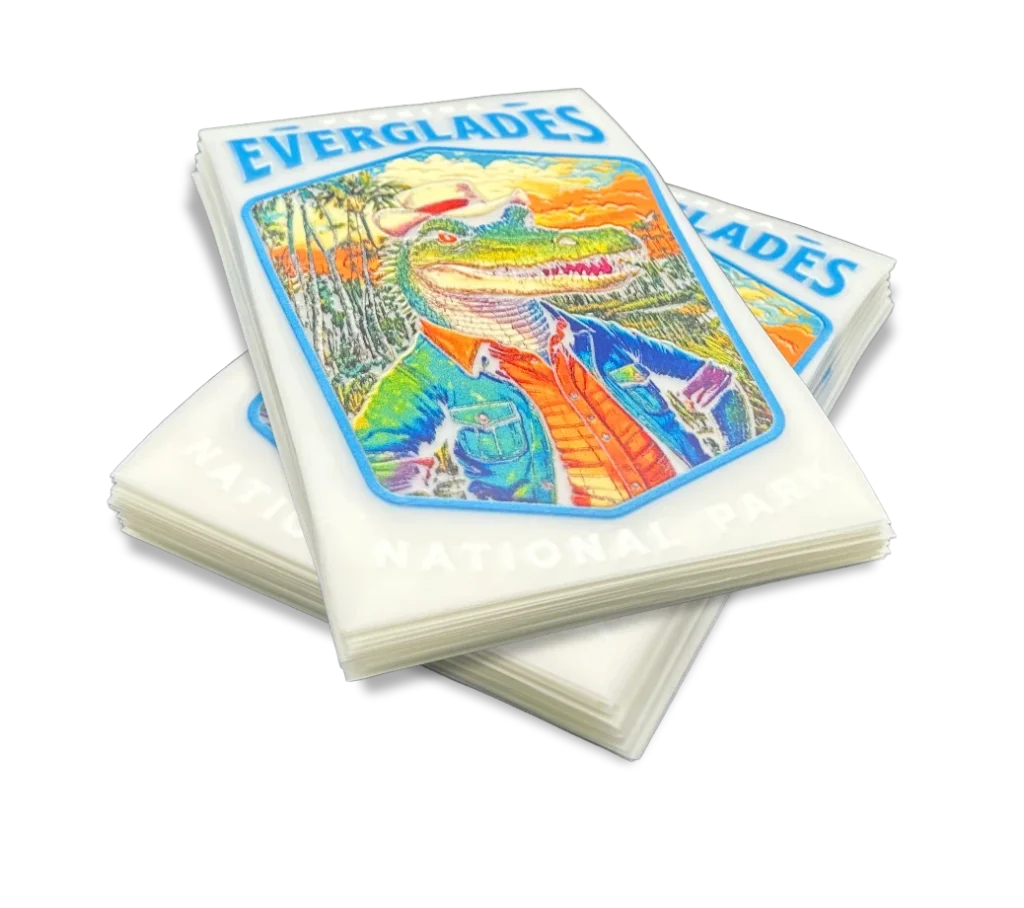
Heat Press Application
Producing transfers efficiently is only one part of the operation. Those transfers still need to be applied to garments.
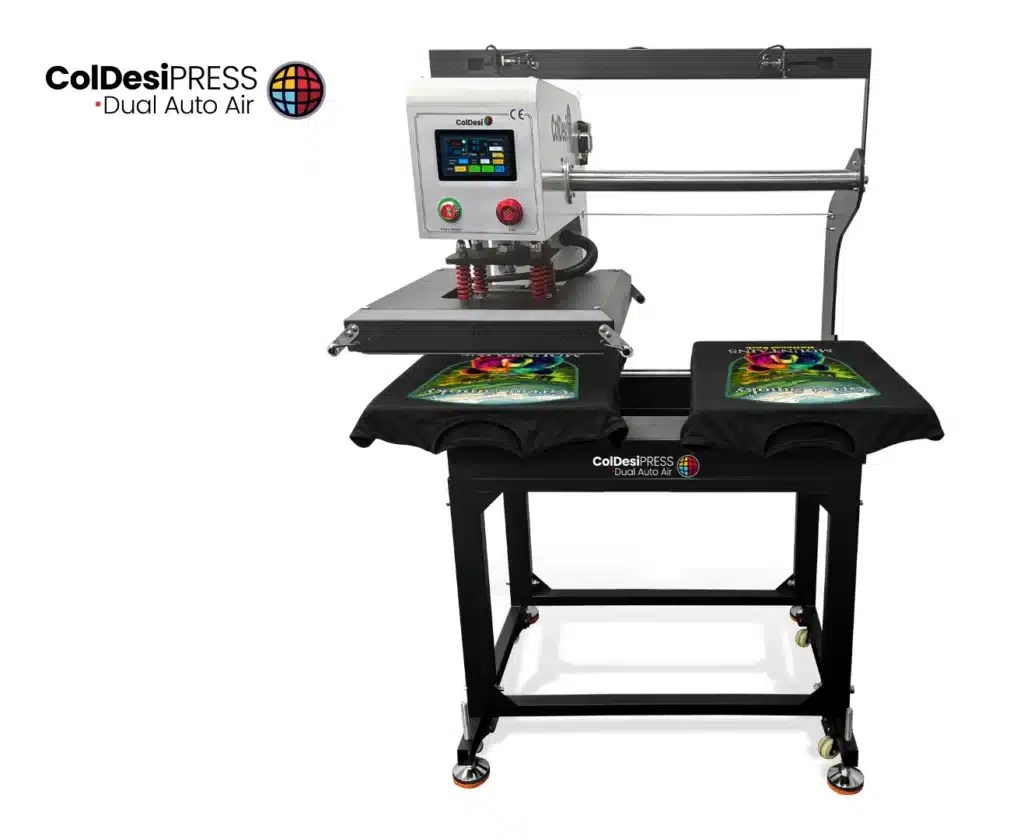
Traditional manual heat presses can be effective for smaller operations, specialty applications, and lower production volumes. However, higher-volume businesses must consider how much labor and time are needed to load, press, unload, and prepare garments.
When printing and cutting capacity increase, heat application can become the next production bottleneck.
Automated heat press systems can improve consistency and support more continuous production
Production Scheduling and Workflow Management
Even well-equipped production departments can experience delays when jobs are not organized efficiently.
Different order quantities, garment types, artwork requirements, and delivery deadlines can complicate scheduling.
Businesses should evaluate how jobs are prepared, grouped, identified, and transferred between departments. Improving these processes can reduce unnecessary handling and help employees maintain production continuity.
How ColDesi Approaches Automated DTF Printing
ColDesi’s approach to DTF automation begins with a fundamental principle: the equipment should fit the business’s production requirements, not force the business to adapt to a fixed equipment configuration.
With one of the industry’s largest selections of commercial DTF printing solutions, ColDesi offers equipment for businesses entering DTF production, businesses bringing outsourced transfers in-house, and high-volume manufacturers requiring advanced production automation.
ColDesi’s solutions extend beyond printers to include powdering and curing systems, automated transfer cutting, heat application equipment, software, supplies, training, and technical support.
This gives customization businesses the ability to develop a complete production strategy with a single equipment and support provider.
Commercial DTF Printers Built Around Production Requirements
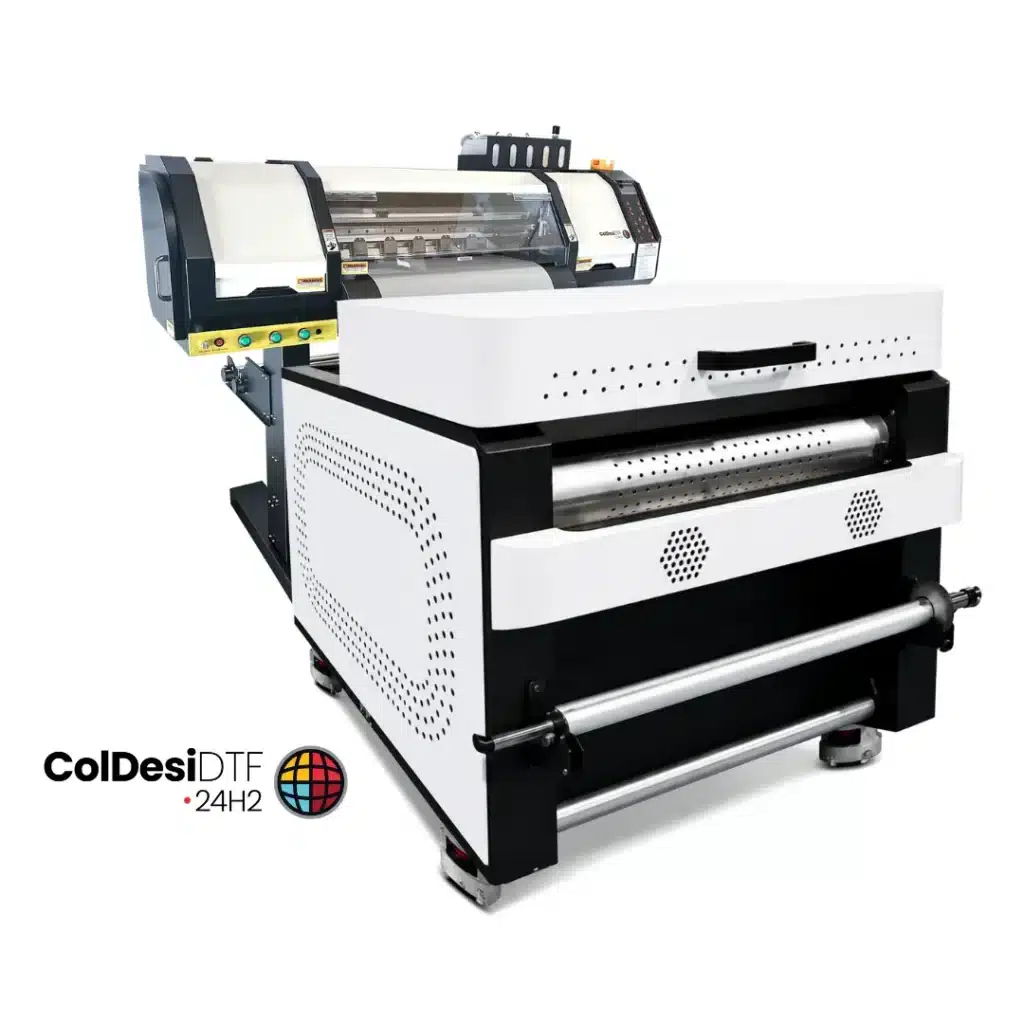
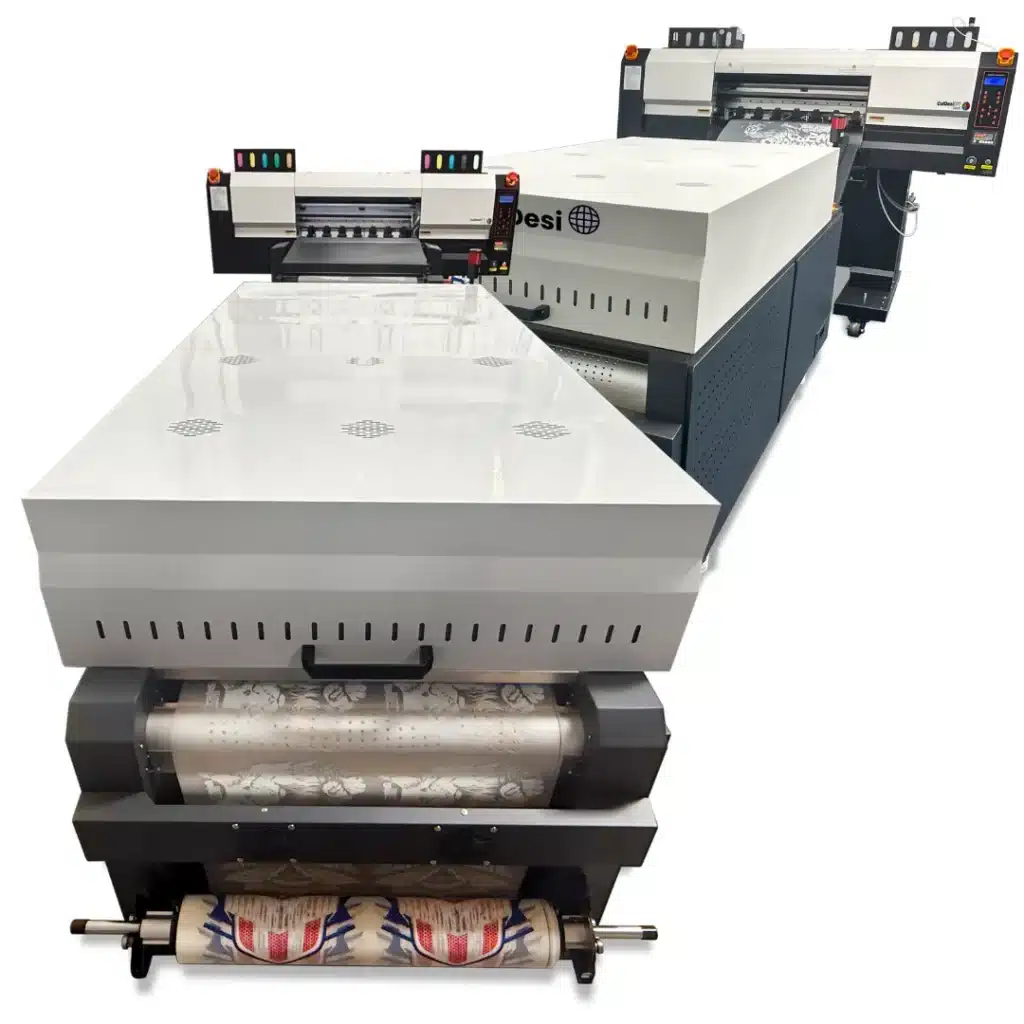
The ColDesi DTF printer and dryer lineup includes compact commercial systems and larger production platforms designed for increasing output.
For established businesses planning significant DTF production, the ColDesi DTF 24 Series offers an important advantage: configurability.
Rather than requiring a completely different production platform each time requirements change, the series allows businesses to expand production capabilities through different printhead configurations, color options, and dryer solutions.
Businesses can select the production capacity they need today while planning for future increases in volume.
Maintaining a familiar equipment and software environment can also help reduce the operational disruption associated with expanding production.
For businesses making a substantial equipment investment, this flexibility can be just as important as the printer’s initial production speed.
Automated Cutting with ColDesi AcroShear
The ColDesi AcroShear Automated DTF Transfer Cutting System addresses one of the most labor-intensive stages of commercial DTF production: separating printed transfers.
AcroShear automatically crosscuts and slits printed and cured DTF film into individual transfer sheets.
Its capabilities include automatic cutting and slitting, printed-mark detection, QR-based job information, and automated film management.
The system can run inline downstream from a DTF dryer or independently using previously printed rolls with an unwind system.
This flexibility is particularly valuable for established production businesses because it allows printing and finishing to be organized around operational requirements.
Rather than assigning employees to continuously cut transfers by hand, businesses can use automation to improve consistency and reduce repetitive handling.
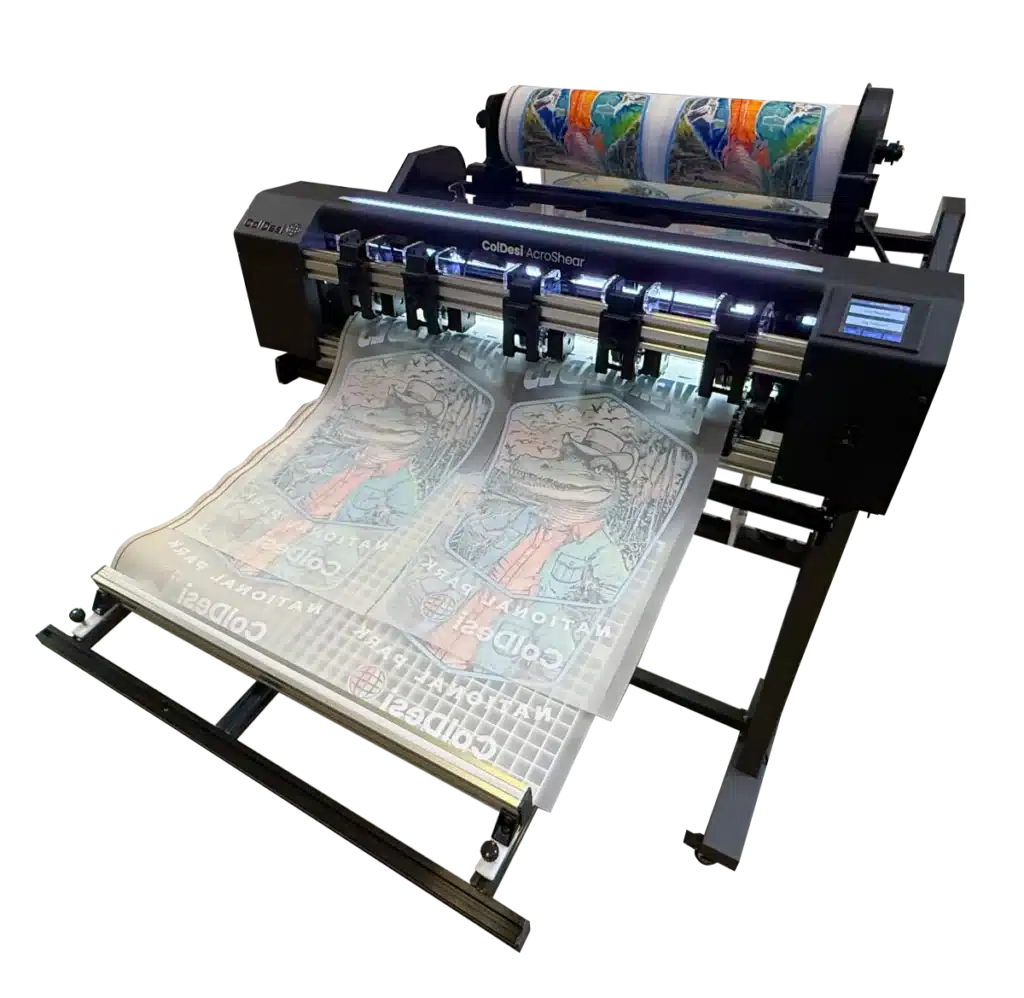
Depending on transfer dimensions and production configuration, AcroShear is designed to process thousands of smaller transfers per hour. Actual output depends on job requirements and operating conditions.
Automated Heat Application with the ColDesi AP360
The ColDesi AP360 Automatic DTF Heat Press helps businesses address another major production constraint: applying transfers to garments.
The AP360 uses a six-station carousel configuration designed for continuous, high-volume apparel production.
By automating key pressing functions, the system helps reduce repetitive operator tasks and supports more consistent production.
ColDesi reports production environments achieving more than 350 finished shirts per hour with the AP360, although actual throughput varies by garment, transfer, staffing, and workflow.
For established screen printing businesses, the AP360 can be especially relevant. These companies already understand garment handling, production scheduling, and finishing requirements. Automated heat application allows them to apply that experience to a new decoration method without building an entirely manual pressing department.
Bringing DTF Printing In-House: What Businesses Should Evaluate
For an established customization business, adding DTF printing is an operational decision as much as an equipment purchase.
A successful transition should begin with a clear understanding of the work the business expects to produce.
Evaluate Existing Customer Demand
Start by reviewing orders currently being declined, outsourced, or produced inefficiently.
A screen printer might find regular demand for short-run, full-color apparel. An embroidery company may find opportunities to offer printed graphics alongside embroidered logos. A promotional product supplier may want to bring branded apparel production in-house rather than depend on outside transfer suppliers.
Existing customer demand provides a stronger foundation for an equipment investment than projected opportunities alone.
Determine the Right Level of Automation
Not every business needs a fully automated DTF production line on its first day.
A company producing modest volumes may be better served by a commercial DTF printer, compatible shaker/dryer, and existing heat press equipment.
A business with substantial recurring production requirements may benefit from investing in automated cutting and heat application from the beginning.
The goal should be to build a system that supports current requirements while allowing production capacity to expand.
Consider the Total Cost of Production
Equipment cost is only one part of a commercial DTF operation.
Businesses should evaluate ink, film, adhesive powder, maintenance, labor, utilities, material waste, and the cost of finishing each garment.
For established decorators, labor efficiency can have a particularly significant effect on profitability.
A printer that produces transfers quickly may not deliver the expected return if the business must hire more employees to handle every downstream production stage.
A more useful measure is the total cost per finished garment, including the time and labor needed to move an order from artwork to shipment.
Plan for Installation, Training, and Ongoing Support
Bringing DTF production in-house requires employees to become familiar with new equipment, software, artwork preparation, maintenance procedures, and production processes.
Even experienced screen printers and embroidery operators will encounter differences in how DTF transfers are produced and applied.
Proper installation, operator training, and accessible technical support can help reduce the learning curve and avoid preventable production disruptions.
This is one reason equipment-provider experience should be part of the purchasing decision.
Why ColDesi Is More Than a DTF Printer Supplier
For established customization businesses, equipment reliability and production continuity are essential. A printer purchase affects customer commitments, employee productivity, delivery schedules, and future growth.
ColDesi has served the customization industry since 1978, providing commercial decoration equipment, training, and customer support.
That experience matters when businesses move from evaluating an individual printer to planning an entire production operation.
ColDesi brings together several elements needed for successful DTF implementation:
A broad commercial equipment lineup. Businesses can evaluate compact commercial DTF printers, configurable high-production systems, and automated finishing solutions without limiting their planning to one production category.
Equipment designed to work as a production workflow. Solutions such as the ColDesi 24 Series, AcroShear, and AP360 allow businesses to address printing, cutting, and heat application as connected production stages.
Training and technical support. Access to equipment specialists, installation resources, operator training, and ongoing support helps businesses prepare employees and maintain their equipment.
Supplies and ongoing production resources. ColDesi’s equipment and supply resources help businesses source the materials needed to run their DTF systems.
Industry experience across multiple decoration methods. ColDesi works with screen printers, embroidery businesses, promotional product suppliers, and other commercial decorators, allowing its equipment specialists to understand how DTF fits alongside established production methods.
For a business bringing DTF printing in-house, these resources can help reduce uncertainty during equipment selection, installation, and the transition into regular production.
Building a DTF Production System That Can Grow with Your Business
The most effective DTF production investment is not necessarily the fastest printer or the most automated system available.
It is the equipment configuration that allows the business to produce its expected order volume efficiently, consistently, and profitably.
For some businesses, that means introducing DTF printing as a complementary production method and expanding automation as demand grows.
For others, particularly established screen printers and contract decorators with significant existing customer volume, it may make sense to invest in a high-production DTF system from the beginning.
The important consideration is how printing, curing, cutting, pressing, and fulfillment work together. Businesses that evaluate these stages as one connected operation are better positioned to find bottlenecks, control labor costs, and plan future expansion.
Frequently Asked Questions About Automated DTF Printing
What is automated DTF printing?
Can a screen printing business benefit from automated DTF printing?
Does automated DTF printing end the need for employees?
How much production volume is needed to justify DTF automation?
Can a business add DTF automation after buying a printer?
Why choose ColDesi for commercial DTF printing?
Take the Next Step Toward Automated DTF Production
DTF printing can create opportunities to expand services, bring outsourced work in-house, improve turnaround times, and increase production flexibility.
But realizing those benefits requires more than selecting a printer.
It requires choosing equipment and processes that work together, supported by the training, technical resources, and industry expertise needed for successful implementation.
ColDesi helps customization businesses evaluate their production requirements and build commercial DTF solutions designed for today’s workload and tomorrow’s growth.
Fill out the form below to speak with a ColDesi equipment specialist about building an automated DTF production workflow for your business.